
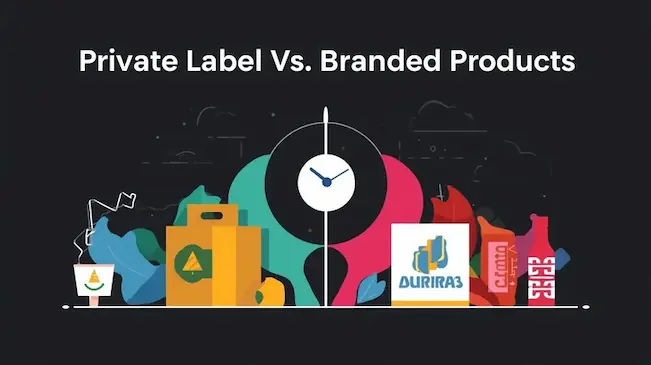
Private Label vs Branded Products Explained: This blog explores the operational differences, strategic advantages, and market roles of private label versus branded products.
Private Label vs Branded Products Explained
Key Takeaways
- Private brands are store owned products offering retailers greater control over pricing, design, and profit.
- National brands build consumer trust through independent research, global availability, and massive advertising campaigns.
- Retailers use data driven strategies to create high quality, lower cost alternatives that compete with famous brands.
- Successful private labels like Kirkland and AmazonBasics foster customer loyalty through value and variety.
The modern retail world is a mix of big name companies and store specific products. Understanding the difference between a private label vs brand is key to seeing how stores actually work today. A private brand is owned and managed directly by the store that sells it. In contrast, branded products are made by separate companies that sell their goods in many different competing shops.
When people ask what is branded products, they are usually talking about items from independent manufacturers. These companies spend a lot on their own research and national ads. On the other hand, private label brands are often made by a third party factory but sold only under the store’s own name.
This approach to private label branding has become common in many markets because it helps keep costs down. Since stores don’t have to pay for massive advertising campaigns, they can offer lower prices to shoppers. It’s a simple way for retailers to give people more options while keeping better control over what sits on their shelves.
Understanding Private Label Brands
To define private brand properly, one must look at who holds the rights to the product name. Unlike national brands found in every grocery store, a private label brand is created and controlled by the retailer that sells it. You might also know these as a store brand. They are a huge part of modern shopping because they give stores a way to offer unique products that you can’t find anywhere else.

In most cases, private label brands are developed and managed by the retailer’s internal teams, even if a third party factory actually makes the goods. This setup gives the store total control over the ingredients, the look of the package, and the final price. When people ask what is private label products, they are essentially looking at a partnership where the retailer’s name and reputation take center stage over the manufacturer’s identity.
A well known example of this is Kirkland Signature by Costco. The company consolidated many of its different store brands into one recognizable name to offer high quality essentials. By doing this, they built strong trust with their members and established themselves as a leader in pricing. The main strategic takeaway here is that a private label can match or even beat the quality of big national brands, which keeps customers coming back to that specific store.
The Mechanics of Branded Products
When comparing a national brand vs private brand, the main thing to remember is that national brands are independent. They aren’t tied to just one store. These companies spend a lot of time and money on their own research to make sure their products stand out. Because they handle their own advertising, you’ll recognize their logos and packaging no matter which shop you walk into.
The way these businesses work with retailers is a bit of a two way street. Stores need these big brands because customers expect to see them on the shelves. If a store doesn’t carry a famous brand, shoppers might go somewhere else. On the flip side, the brands need the stores to give them shelf space so they can actually reach people. It’s a partnership that keeps the retail world moving.
Coca-Cola is a perfect example of how this works. They’ve spent years making sure their taste and look are the same everywhere in the world. This created a situation where people actively look for the product, so stores almost have to carry it to keep customers happy. The big lesson here is that branded products win by becoming a household name that people trust and specifically ask for.
Private Label vs. Branded: Key Differences
The main thing to keep in mind when looking at private label vs branded products is who actually calls the shots. With a national brand, the company that makes the product decides how much it costs, how it’s advertised, and when to change it. For a store’s own line, the retailer takes over those roles. This usually means the store can cut out extra costs and offer lower prices to shoppers.
When a store chooses between private brands vs national brands, they are also looking at how quickly they can change things up. Retailers can often jump on new trends faster because they don’t have to wait for a massive manufacturer to update their entire global line. It really comes down to a few basic operational differences:
- Control over private label logo and packaging design: The store gets to decide exactly how the product looks on their specific shelves.
- Profit margins: These are usually better for the store because they aren’t paying a premium for a famous brand name.
- Marketing responsibility: The store handles all the promotion for its own brands, while the big manufacturers handle the ads for national products.
- Production flexibility and supply chain speed: Since they own the process, stores can often adjust their orders or designs much faster.
Strategic Advantages of Private Label Marketing
The way stores handle their own products has changed a lot. It used to be just about cheap generic options, but branding in the retail sector has evolved to include high end items too. Many stores now use a private branding strategy to create premium lines that sit right next to the big name brands. This helps a business build a specific identity that shoppers can only find at their locations.
A smart private label strategy also lets a store fill gaps that the big manufacturers might miss. By looking at what people are actually buying and asking for, a shop can create niche products that fit exactly what their local customers need. This keeps the shelves relevant and lets the store move much faster than a massive global brand could.

AmazonBasics is a great example of this in action. They used their own internal data to find simple, high demand items that people were already searching for on their site. This allowed them to grow into hundreds of different categories very quickly without spending much on traditional ads. The big takeaway is that data driven private label marketing can really shake up a category by focusing on what people actually use and offering it at a better price.
Real World Private Label Branding Examples
Store owned brands have come a long way. It’s not just about generic stuff anymore; these products are now in almost every part of our lives. Retailers use private label branding to offer everything from organic snacks to medical supplies, often creating different brands for different types of shoppers.
These private label branding examples show how stores use their own names to build trust in different areas. Whether they are focusing on the lowest price or a more high end feel, having these in house options is now a standard part of how big stores work.
- Grocery: Archer Farms (Target) is used for more specialty or fancy food items.
- Apparel: Amazon Essentials focuses on basic, everyday clothes at a steady price.
- Health: Up & Up (Target) covers common household and personal care items for a lower cost.
- Pharmacy: CVS Health provides a huge variety of over the counter medicines people trust.
Summary
The whole private label vs branded thing really comes down to how stores and manufacturers work together to give shoppers more options. Famous names like Coca-Cola stay strong because people have trusted them for years. They spend a lot of time making sure you can find their products in almost any store you walk into.
On the flip side, people are starting to see what are private label brands in a much more positive way. Store owned lines like Kirkland Signature show that you can get the same quality as a big brand without paying as much. Similarly, AmazonBasics has proven that using data to find exactly what people need is a great way to grow quickly.
In the end, both types of products have a place on the shelf. While the big name brands bring trust and familiarity, private labels give stores a way to offer better value and more variety. This balance is what keeps the retail market competitive and gives us more choices every time we shop.