
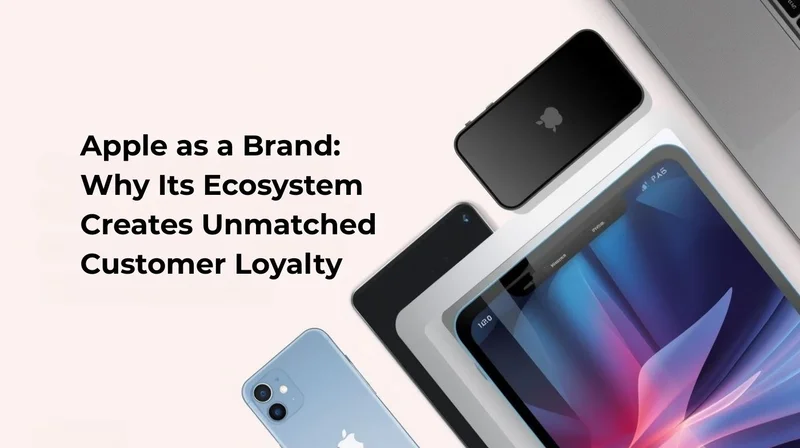
Apple as a Brand maintains global dominance through vertical integration, proprietary silicon, and a seamless device ecosystem.
Key Takeaways
- Vertical integration of hardware and software ensures high performance and unmatched system reliability.
- Proprietary M-series chips offer superior efficiency, long battery life, and integrated AI capabilities.
- High resale value and long-term software support justify the premium initial investment costs.
- Seamless device connectivity and services create strong loyalty while presenting significant switching barriers.
Most people know the 1976 origins in a California garage, but the actual shift to a global leader came through a series of pivots in how computing hardware was managed. The early days of the Macintosh in 1984 introduced a graphical interface that moved away from command-line coding, setting a precedent for how the brand would prioritize user interaction over raw technical specs. As the 2000s hit, the hardware line expanded into consumer electronics with the iPod and eventually the iPhone in 2007. This transformed the company from a niche computer manufacturer into a massive entity that dictates hardware trends across several continents.
Global presence today involves a footprint of over 500 physical locations. These retail spaces function less like standard shops and more like physical manifestations of the technical support system. By controlling the environment where people first touch the devices, the brand maintains a specific standard of service that isn’t dependent on third-party retailers.
Historical Milestones in the Transition to Apple Silicon
A massive change occurred in 2020 when the company began moving away from Intel processors to its own proprietary M-series chips. This move, known as the transition to Apple Silicon, allowed for total control over the internal architecture of the Mac and iPad lines.
- The introduction of the M1 chip marked the end of relying on external chipmakers for core performance.
- Efficiency gains meant laptops could run longer without fans or heavy cooling systems.
- This year, the M5 chip architecture has further integrated mobile and desktop processing capabilities.
This shift wasn’t just about speed. It allowed the software and hardware teams to work on the exact same silicon roadmap, meaning macOS could be tailored to the specific transistors on the chip.

Apple as a Brand Identity and Global Positioning
The brand logic is built on the idea that technology should stay out of the way. Instead of advertising gigahertz or RAM counts, the focus stays on the tactile experience of the glass, the aluminum casing, and the fluidity of the interface. This brand identity relies on the concept of vertical integration. Because the company builds the operating system, the physical device, and the processors inside, the components rarely conflict. It creates a closed environment where things generally just work without the driver updates or registry errors common in more open systems.
Privacy has also been pulled into the center of the identity. Marketing data security as a standard feature rather than an add-on has helped distance the brand from competitors who rely more heavily on ad-tracking revenue.
Identifying the Intended Audience for Premium Computing Solutions
The typical user often falls into the creative or professional categories, photographers, developers, and students who need a high degree of reliability and are willing to pay a higher entry price. The brand doesn’t try to compete for the budget-conscious shopper. Instead, it targets those who view technology as a long-term investment.

Online shoppers look at these products as high-margin items that hold their resale value much better than average electronics. This appeals to people who want a predictable lifecycle for their tech, where a laptop or phone can be used for five or six years and still command a decent price on the used market. This positioning cements the brand in the premium tier, far removed from the high-volume, low-cost strategy of many global competitors.
Analyzing the Synergy within the Apple Product Ecosystem
Ownership of one device often leads to another because of how the clipboard and file management are handled across the hardware. A user might start a document on a Mac and find it immediately available on an iPad via iCloud without any manual syncing. This isn’t just about cloud storage; features like Universal Control allow a single mouse and keyboard to move across different screens sitting on a desk. The hardware talks to itself using local wireless protocols, so the hand-off of a phone call from an iPhone to a MacBook happens almost instantly.
Wearables and Spatial Computing: The Role of Apple Vision Pro
The Apple Watch and AirPods function as extensions of the phone rather than standalone accessories. The Watch handles biometric data and notifications, while the AirPods switch their connection automatically based on which device is actively playing audio. With the introduction of the Apple Vision Pro, this connectivity moved into spatial computing. It uses the same ID system to mirror a Mac screen into a virtual space, turning a laptop into a massive private display.
The Services Layer: Strengthening Loyalty Through Software Interconnectivity
Software services act as the glue. Subscriptions for storage, music, and device insurance are tied to a single ID, making it difficult to switch to a different brand without losing access to a curated library or backed-up photos. iMessage and FaceTime are locked to the hardware, creating a social barrier for users who consider leaving the platform. It’s a closed loop where the software makes the hardware more useful over time through regular OS updates that often add features to older models.
Operational Excellence and Standards of Technical Innovation
Building the chips, the physical casing, and the operating system in-house removes the friction found in generic PC or Android manufacturing. Most tech companies buy components from different vendors and try to make them work together. Here, the engineering teams collaborate on the same floor. If the software team needs a specific way to handle face recognition, the hardware team builds a dedicated neural engine into the silicon to support it.
The Impact of Proprietary Chipsets on System Reliability
Since moving to the M-series and A-series silicon, the machines run much cooler and rarely require the loud cooling fans common in high-performance laptops. This proprietary architecture means the battery life is often significantly higher than competitors using off-the-shelf parts. System crashes are less frequent because there are no third-party driver conflicts, the OS only has to support a very specific set of internal parts.

Security Architecture and the Privacy-First Brand Philosophy
The hardware includes a “Secure Enclave,” which is a separate area of the processor that stores fingerprints and face data. This data never leaves the device or goes to a cloud server. Encryption is on by default, and the brand has made a point of blocking ad-trackers at the system level. This isn’t just software; it’s baked into how the processors handle requests from third-party apps.
Evaluating Apple’s Pricing Philosophy and Value Positioning
Entry points for these products stay high. There are no “budget” versions that compromise on the build material. Even the lower-end models use the same aluminum and glass as the flagships. This keeps the brand out of price wars. They don’t discount products mid-cycle, which protects the perceived value for people who bought at launch.
Long-Term Value Retention and Device Longevity Factors
- High resale value means a three-year-old iPhone still sells for a large percentage of its original cost.
- Software support usually lasts for six or seven years, far exceeding the industry average.
- The secondary market for used devices is massive because the hardware holds up physically.
Shoppers tend to look at the total cost of ownership. If a laptop costs more upfront but lasts twice as long and sells for $400 five years later, the math works out differently than buying a cheaper, plastic alternative that might be obsolete in twenty-four months.
Market Reputation and the Foundation of Consumer Trust
A central pillar of the brand’s standing is a retention rate that has consistently hovered around 92%. Most users who buy an iPhone or a Mac stay within that environment for their next purchase, which is a significantly higher percentage than what is seen with competing hardware manufacturers. This loyalty isn’t just about liking the hardware; it’s a result of the friction involved in moving data, photos, and messages to a different operating system. The active installed base reached 2.5 billion devices, showing that despite a saturated market, the brand continues to find space in emerging economies like India and parts of Latin America.
Navigating Regulatory Scrutiny and App Store Transparency
The “walled garden” approach has faced heavy pushback from regulators, particularly in the European Union under the Digital Markets Act. There have been ongoing disputes regarding how the App Store operates, with the brand recently accused of delaying compliance changes that would allow for third-party marketplaces. For the average person shopping for apps, this looks like a struggle between the brand’s desire to maintain a curated, secure experience and the legal requirement to allow more competition. Developers have also been vocal about the commission structures, leading to a more public conversation about how much control one company should have over a global software economy.
Industry Recognition and the Perception of Innovation Leadership
Even with the legal noise, the brand is still frequently cited as the most valuable globally, with recent year valuations placing its brand worth over $600 billion. The perception of being a leader in innovation has shifted recently from purely hardware to “Apple Intelligence.” By folding AI directly into the silicon and software, the goal has been to make these tools feel like standard features rather than experimental add-ons. This approach keeps the brand at the top of lists like Fortune’s “Most Admired Companies,” where reliability and integrated design are valued over being the first to release a new, unproven technology.
The Apple 2030 Vision for Carbon Neutrality
The 2030 goal is to have a net-zero carbon impact across the entire business, which includes the manufacturing supply chain and the electricity users consume when charging their devices. The company has managed to cut overall emissions by more than 60% compared to its 2015 baseline. A lot of this comes from pushing suppliers to use 100% renewable energy. The launch of the Mac mini in late 2025 served as a benchmark for this, marketed as a carbon-neutral product made with over 50% recycled content.
Transparency in Global Supply Chain and Material Sourcing
Supply chain transparency has become a standard part of the annual reporting process. There is a heavy emphasis on 15 specific materials, including cobalt, lithium, and gold, which the brand aims to source entirely from recycled or renewable origins. Disassembly robots like “Daisy” are now capable of taking apart 36 different iPhone models to recover these materials. While the brand has been criticized in the past regarding labor conditions, the current strategy involves rigorous third-party audits and a public list of smelters and refiners to provide a clearer picture of where the raw components actually come from.
Strategic Strengths and Inherent Brand Limitations
The primary strength for anyone using more than one Apple device is the “Continuity” feature set. Copying a link on an iPhone and hitting paste on a Mac is a small interaction, but it’s one that users find hard to give up. This synchronization extends to the Apple Watch and AirPods, where the switch between audio sources happens without the user needing to open Bluetooth settings. This creates a high level of convenience that often justifies the premium price point for those who prioritize a workflow without technical interruptions.
The Constraints of a Closed Ecosystem Architecture
The downside of this tight integration is the lack of compatibility with outside products. If someone wants to use an Apple Watch with an Android phone, or if they want to move their iMessage history to a non-Apple device, they hit significant walls. This “lock-in” is a deliberate strategic choice that keeps users from leaving, but it can be frustrating for those who want to mix and match hardware from different brands. There is also a reliance on the iPhone for a large chunk of total revenue, which some market analysts see as a risk if a major shift in smartphone usage ever occurs.
Assessing Consumer Suitability for the Apple Ecosystem
High-end creative work usually demands a specific tier of hardware that goes beyond the base models. For video editors working with 4K or 8K RAW footage, the MacBook Pro with an M4 Max or the newer M5 Pro chipset is often the baseline. These machines are built with high-bandwidth unified memory, meaning the CPU and GPU share the same pool of RAM, which significantly cuts down on the lag typically seen during heavy rendering in DaVinci Resolve or Final Cut Pro.
Color accuracy is another factor that drives professionals toward the Liquid Retina XDR displays found in the Pro lineup. Photographers and UI/UX designers rely on the P3 wide color gamut to ensure what they see on the screen matches the final output. While the MacBook Air is capable of light photo editing, it lacks the sustained thermal management needed for long 3D rendering sessions in Blender or heavy motion graphics work. For those at a desk, the 24-inch iMac or a Mac Studio provides a more permanent workstation feel, though the portability of the Pro laptops has made them the default for most on-site creative roles.
Suitability Factors for Students and General Productivity Users
For someone primarily handling research, writing, and administrative tasks, the MacBook Air remains the most practical choice. It’s fanless, meaning it’s silent in a library or a quiet office, and it’s light enough to carry all day. The M3 or M4 versions of the Air provide more than enough power for running dozens of browser tabs alongside Microsoft 365 or Google Workspace without the system slowing down.
Students often find the iPad Air or iPad Pro with an Apple Pencil useful for note-taking and digital sketching. However, the iPad still operates on iPadOS, which doesn’t handle complex file management or multi-window multitasking as efficiently as a Mac. A student’s choice often comes down to whether they need a “computer-first” experience for coding and long-form writing or a “tablet-first” experience for handwriting and media consumption.
Informed Decision-Making: Evaluating Apple Before an Online Purchase
Buying from non-official retailers online carries the risk of receiving refurbished units disguised as brand new, or worse, counterfeit clones. A quick way to verify a device is to check the serial number before handing over any payment or finalizing the delivery. On a brand-new, unactivated iPhone or Mac, the official Apple “Check Coverage” website should return a message stating the “device has not been activated.” If it shows a past purchase date or an expired warranty, the product isn’t new.
The packaging itself offers physical clues. Genuine Apple boxes use high-quality, dense cardboard with clean, high-resolution printing. Clones often have slightly blurry text or inconsistent font spacing. On the device itself, checking the model number in Settings is telling:
- Model numbers starting with “M” are brand new.
- “F” indicates a refurbished unit.
- “N” is a replacement device.
- “P” means it was originally a personalized or engraved item.
Utilizing Official Channels for Technical Specifications and Warranty Verification
Once a device is in hand, the serial number should be matched between the box, the physical chassis, and the “About” section in the software. This 12-digit code is the only way to confirm the remaining duration of the one-year limited warranty. For those shopping for used or older models, checking the “Vintage and Obsolete” list on the official support site is necessary to ensure the hardware can still be repaired. Products considered vintage, usually those out of production for over five years, may have limited parts availability at authorized service providers.
Assessing Software Compatibility and Ecosystem Integration Needs
Before committing to the ecosystem, a user needs to check if their essential third-party software is native to Apple Silicon. While most apps now run natively on M-series chips, some older niche enterprise software might require “Rosetta 2” translation, which can impact performance.
Integration also depends on having a consistent Apple ID. If someone is moving from Android, they should verify that their most-used apps offer iCloud sync or have an equivalent version in the App Store. The seamless “Hand-off” and “Universal Clipboard” features only work if all devices are signed into the same account and meet the minimum system requirements generally means running at least iOS 18 or macOS Sequoia.
Summary
Apple has shifted from a niche computer manufacturer into a global hardware giant by controlling every aspect of its production, from the proprietary M-series silicon to the final software interface. This vertical integration allows for a level of device interconnectivity that is difficult to replicate, where iPads, Macs, and iPhones share clipboards and files almost instantly. While this creates a high barrier for anyone trying to leave the platform, it ensures that the hardware and software are tuned to work together without the driver conflicts or performance lags often found in more open systems.
Market loyalty remains high because of the hardware’s long-term value and a predictable support lifecycle that usually lasts six or seven years. Even as the company faces increasing legal pressure in regions like the EU over its closed App Store model, its reputation for privacy and data security continues to drive adoption among creative professionals and students. The brand doesn’t compete on low prices, instead positioning its products as premium investments that maintain a high resale value, which appeals to shoppers looking for total cost of ownership rather than an immediate bargain.
Sustainability has become a core part of the operational strategy, with a move toward carbon neutrality by 2030 and a heavy reliance on recycled materials like cobalt and gold. For consumers, navigating this ecosystem requires verifying product authenticity through serial numbers and ensuring software compatibility with the newer ARM-based chips. The shift toward integrated AI and spatial computing suggests a future where the hardware becomes even more intertwined, though the strict “lock-in” of services like iMessage remains a primary constraint for those who prefer a mix-and-match approach to their technology.