
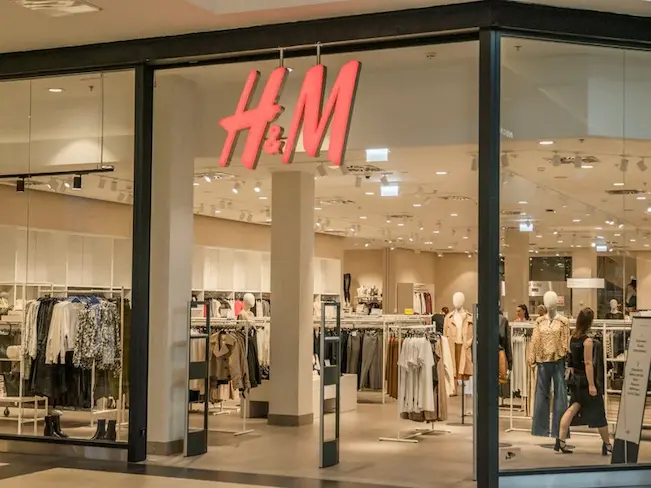
H&M Under the Microscope – H&M balances high-volume democratic fashion with a transition toward circular business models and sustainability.
Key Takeaways
- Global success stems from scaling runway trends into affordable, high-volume inventory for mass markets.
- Massive production volume allows for low pricing but often sacrifices long-term garment durability.
- Increased transparency and Conscious collections aim to address persistent environmental and ethical criticisms.
- Future growth focuses on AI-driven inventory, secondhand markets, and reaching 100% sustainable materials.
H&M started in 1947 as Hennes, a single shop in Västerås, Sweden, that only sold women’s clothing. After acquiring the hunting apparel store Mauritz Widforss in the late sixties, the inventory expanded into menswear, and the name shortened to the initials people recognize today. This transition from a local Nordic boutique to a presence in over 70 countries happened through a very specific aggressive physical expansion strategy that defined much of the late 20th-century retail landscape.
The core internal directive, fashion and quality at the best price in a sustainable way, acts as the primary constraint for their design teams. It’s a difficult balance to hit. Most of the corporate governance happens through the H&M Group, which serves as an umbrella for several distinct brands, keeping the flagship H&M separate from their higher-end or niche experiments. This parent company structure allows them to test different market segments without diluting the main brand’s specific identity as a high-volume leader.
Market Positioning and Value Proposition
In the broader retail hierarchy, the brand sits squarely in the middle, filling the gap between luxury houses and basic discount stores. They occupy a space where price sensitivity meets aesthetic awareness. The concept of Democratic Fashion is essentially their mechanism for taking runway trends and translating them into materials and price points that work for a general global audience.
- Design cycles are exceptionally short to maintain relevance.
- Inventory moves through a massive logistics network to prevent stagnation.
- The value isn’t found in garment longevity, but in the immediate availability of current styles.
Managing this requires a high-volume inventory model that relies on massive economies of scale. They have to predict what will sell months in advance while keeping enough flexibility in the supply chain to pivot when a specific trend takes off unexpectedly. This tension between planning for millions of units and reacting to the weekly shifts in consumer interest is what keeps them at the top of the mid-market sector. It’s less about being the highest quality and more about being the most visible and accessible option when a consumer wants a specific look right now.

The Product Ecosystem and Pricing Architecture
Diversification Across Sub-Brands and Collections
H&M maintains a sprawling catalog that starts with standard everyday basics, think plain cotton t-shirts and jersey leggings, and scales up to more specialized lines. The Conscious collection is pushed as their route toward using recycled polyester and organic cotton, though it sits right alongside the standard high-volume inventory. On the higher end, Studio releases drop a few times a year with more experimental cuts and better fabrics, aimed at a demographic that usually shops at more expensive boutiques.
The brand regularly partners with luxury houses like Mugler or Rabanne. These limited runs aren’t about long-term sales volume; they function as a way to pull high-fashion prestige down into a retail space associated with everyday shopping. By putting a $200 version of a $2,000 blazer on the racks, the general perception of the entire store gets a temporary lift. This keeps the aesthetic feeling current across different countries, as the core design language stays unified even if a store in Tokyo stocks slightly different items than one in Berlin.
Analyzing the Pricing Strategy
The ability to keep prices where they are comes down to sheer volume. Because the company orders millions of units across thousands of global locations, they can squeeze the manufacturing costs in a way smaller labels can’t. This cost-leadership approach makes the clothes accessible to almost any income level, which is the primary driver of their market share. You can walk in with twenty dollars and leave with an outfit, a reality that dictates the material choices.

- Massive production scales drive down the cost per garment.
- Synthetic blends are often substituted for natural fibers to hit specific price targets.
- Labor costs are spread across enormous shipping batches to keep margins thin but profitable.
There is a clear trade-off here. Lower prices usually mean the garments aren’t built to survive years of heavy use. Thinner fabrics and simpler stitching methods are standard in the entry-level tiers. For the person buying, the value is in the immediate look and the low barrier to entry, rather than the long-term durability of the piece. The cycle relies on the consumer coming back for a replacement or a new trend rather than keeping a single item for a decade.
Evaluating Corporate Responsibility and Ethics
Examining the Question: Is H&M Sustainable?
The Conscious Choice labels found on store hangers are the most visible part of the company’s environmental push. These tags indicate a garment contains at least 50% more sustainable materials, like organic cotton or recycled polyester. While the transparency regarding material makeup has improved, the sheer volume of items produced every week creates an inherent friction with any environmental claim. Piling up millions of new garments annually makes it difficult for any brand to claim a neutral footprint, regardless of the fabric blend.
There are attempts at circularity, such as the garment collecting bins located near the registers where shoppers can drop off old textiles. In some flagship locations, they’ve even experimented with clothing rental and repair stations. These are interesting side projects, but they represent a tiny fraction of the total business. The real challenge remains the high-volume production model itself, which relies on fast turnover and constant consumption, concepts that don’t easily align with long-term resource preservation.
Transparency and Supply Chain Governance: Is H&M Ethical?
Data on where clothes are actually made is more accessible here than with many of their competitors. They publish a public supplier list that includes factory names and addresses, which is a step toward accountability. Being part of the Accord on Fire and Building Safety in Bangladesh shows some commitment to physical workspace standards, though the actual day-to-day enforcement in subcontracted hubs is notoriously hard to track from a corporate headquarters in Stockholm.
- Participation in the Fair Wage Method aims to improve pay structures at the factory level.
- Third-party audits from groups like the Sustainable Apparel Coalition provide a reality check on internal reports.
- ESG scores often rank the company higher than other fast-fashion peers due to these disclosure habits.
Independent labor rights groups still point out gaps between corporate policy and the reality of living wages in manufacturing hubs. While the brand is often a first mover in signing industry-wide safety agreements, the pressure of meeting massive order deadlines can sometimes trickle down to factory floors in ways that official audits miss. It’s a case of a company being very good at the paperwork and the formal commitments, while still operating within a global system that prioritizes low-cost labor.
Market Perception and Consumer Trust Factors
Understanding Buyer-Intent and Choice Drivers
The primary reason people keep going back to H&M isn’t complicated: it’s the ability to find a specific runway look for the price of a lunch. For the 18-to-25 demographic, the intent is usually driven by trend-refreshing rather than long-term wardrobe building. They need something for a specific event or a current season, and the brand’s logistics are set up to provide that exact item within weeks of it appearing on social media. It’s a high-speed feedback loop where the consumer’s desire for novelty is met with immediate, low-cost availability.

Digital commerce has changed the way people interact with the racks, but the physical stores still carry a lot of weight in city centers. Most shoppers use the app to check local stock before ever walking through the door, blending the convenience of scrolling with the immediate gratification of a fitting room. Loyalty in this space is fickle; while there is a growing group of conscious shoppers who look for the green tags, the data shows that price and style still outweigh ethics for the majority of the high-volume customer base. If a shirt looks good and the price is right, that usually closes the sale regardless of the broader environmental conversation.
Navigating Greenwashing Allegations and Market Criticism
The brand has spent the last few years under a microscope regarding how it markets its environmental efforts. Legal challenges, specifically in New York and through European watchdogs, have focused on whether sustainable is too vague a term for a company that produces billions of garments. One major point of contention was the use of environmental scorecards, based on the Higg Index, which were eventually pulled from the website after critics found the data was either misleading or lacked context about the total impact of fast-fashion production.
- Courts in Missouri and New York have seen class-action suits targeting Conscious Choice marketing.
- The EU has tightened regulations on green claims, forcing more specific data on recycled content percentages.
- Independent reports often highlight that even recycled collections rely heavily on plastic bottles rather than garment-to-garment recycling.
Managing the gap between wanting to grow a massive business and trying to conserve resources is a constant PR tightrope. When a company is built on the idea of selling as much as possible, as fast as possible, any claim of being environmentally friendly is going to be met with skepticism. These controversies haven’t necessarily tanked the brand’s value, but they have forced a shift in how they talk to the public. They’ve moved away from broad eco buzzwords and toward more granular, technical disclosures to avoid further litigation and maintain some level of trust with an increasingly skeptical audience.
Competitive Context and Industry Outlook
Neutral Comparison within the Fast-Fashion Landscape
H&M sits in a precarious middle ground between the hyper-speed of Zara and the basic-heavy stability of Uniqlo. While Zara (Inditex) relies on a pull model, manufacturing small batches in Europe and North Africa to react to trends in under three weeks, H&M typically uses a push model, ordering larger volumes from Asian hubs like Bangladesh and Cambodia months in advance. This makes H&M less agile than Zara for sudden viral trends but often allows for a lower entry price due to the sheer scale of those pre-planned orders.
Uniqlo (Fast Retailing) offers a different contrast, focusing on LifeWear rather than runway replicas. Their supply chain is built for longevity and technical fabrics like HeatTech, which don’t go out of style. H&M tries to bridge both worlds, maintaining the massive retail footprint of a traditional giant while attempting to integrate the digital-first speed of online players like Shein. The differentiation now comes through their omnichannel approach; they use their thousands of physical stores as local distribution hubs and return centers, a logistical advantage that digital-only competitors can’t easily match.
Future Projections for the Brand
The 2030 roadmap is centered on a circular business model, which is a significant pivot from the linear take-make-waste system. The goal is for 100% of materials to be recycled or sustainably sourced by the end of the decade. As of 2024, they reached roughly 89%, though the final 10% is the most difficult because it requires scaling new, unproven textile technologies like lab-grown cotton or CO2-based polyester. These innovative textiles are being tested in small capsules, but moving them to the main line without spiking prices is the primary hurdle.
- AI-driven inventory management is now being used to cut down on overstock by predicting local demand down to the specific store level.
- Digital avatars and virtual fitting rooms are being piloted to reduce the high carbon cost of garment returns.
- Investment in the second-hand market through platforms like Sellpy is meant to decouple revenue growth from the production of new units.
The long-term outlook depends on whether the brand can successfully transition from being a seller of new goods to a service provider of fashion. This includes scaling up repair and rental services which currently only exist in a few major cities. If consumer behavior continues to shift toward pre-loved items and higher quality standards, the brand’s success will be measured by its ability to manage a garment’s entire lifecycle rather than just the initial sale.
Summary
H&M has moved far beyond its 1947 roots as a single Swedish boutique, morphing into a global retail anchor that operates under a complex parent company structure. By prioritizing a democratic fashion model, the brand bridges the gap between high-end aesthetics and mass-market affordability, relying on massive economies of scale to keep prices low. While this approach allows them to dominate the mid-market sector, it creates an ongoing tension between their high-volume production needs and the inherent limitations of garment durability and material quality.
The company’s sustainability profile is a mix of high-visibility initiatives, like the Conscious line and garment recycling bins, and the difficult reality of a business built on fast turnover. While they lead many peers in supply chain transparency by publishing factory lists and joining safety accords, they face persistent scrutiny over greenwashing and the environmental cost of manufacturing millions of items. These challenges have led to a shift toward more technical disclosures as they try to balance corporate growth with an increasing global push for stricter environmental standards and labor accountability.
Looking ahead, the brand is attempting to pivot toward a circular model by 2030, leaning on AI for better inventory control and investing in the secondhand market to diversify its revenue. They remain a unique fixture in the landscape, positioned between the trend-speed of Zara and the functional focus of Uniqlo, but their future depends on navigating a changing consumer base. As shoppers increasingly weigh price against ethics, the company’s success will likely hinge on whether it can actually scale innovative textiles and repair services without losing its core identity as a low-barrier fashion provider.