
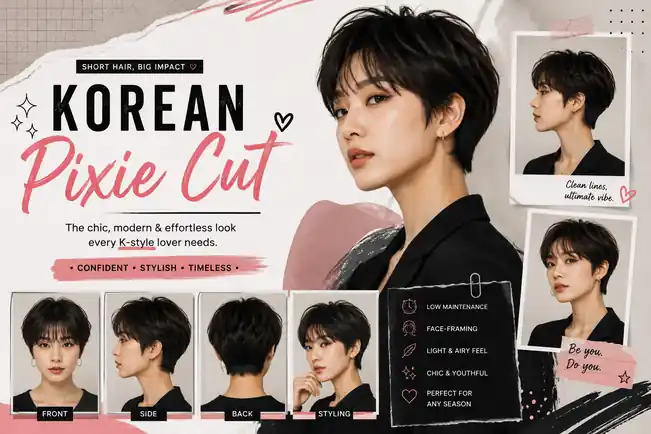
Discover Why the Korean Pixie Cut Is the Best Short Hairstyle for Fine Hair, highlighting volume boosting techniques and styling tips.
Key Takeaways
- Advanced Korean cutting techniques like precision layering create the structural illusion of hair density.
- Delicate perimeters and wispy bangs provide essential texture without flattening fine hair strands.
- The specialized Morigon root perm offers lasting crown lift, minimizing daily heat styling needs.
- Utilizing lightweight styling powders ensures strong root hold without adding heavy product weight.
Fine hair has always carried a unique set of challenges. Without proper styling or the right cut, it can fall flat, cling to the scalp, and lack the bounce that thicker textures naturally possess. For years, many with fine strands avoided short cuts altogether, fearing that reducing length would only emphasize thinness. But in 2026, that narrative is shifting entirely. The korean pixie cut has emerged as the definitive solution for fine haired individuals seeking volume, movement, and a modern silhouette that feels both effortless and refined.
What sets this style apart from traditional Western pixie cuts is its foundation in K-Beauty cutting techniques. Instead of relying on aggressive fades and clippered sides, the Korean approach emphasizes precision layering, soft perimeters, and strategic texture placement. The result is a short hairstyle that doesn’t just look fuller, it actively creates the illusion of density through structured yet airy design. This trend is not about adopting a generic crop. It’s about understanding how advanced cutting methods like the Leaf Cut can transform fine hair from limp and lifeless into a sculpted, voluminous statement.
This guide will walk through every aspect of the Korean pixie cut, from its technical anatomy to the styling products and salon language that ensure the best possible outcome. Whether transitioning from a bob or making a bold leap from long hair, understanding the nuances of this style makes all the difference in achieving a feminine pixie cut style that suits professional settings, creative spaces, and everything in between.
The Anatomy of a 2026 Korean Pixie Cut for Fine Hair
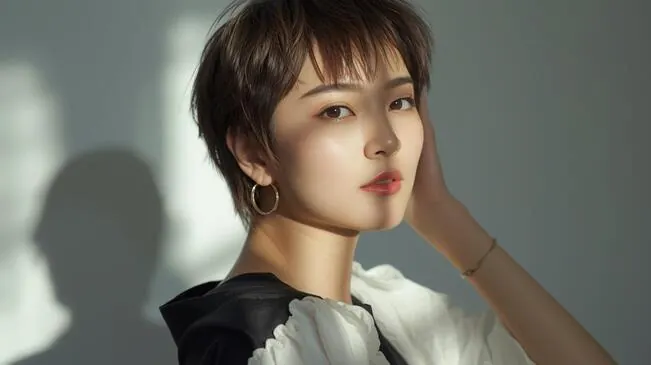
The term “Korean pixie” refers to more than just a geographic origin. It signals a distinct philosophy in hair design that prioritizes softness, dimension, and face framing delicacy over harsh lines and severe contrasts. While Western pixie cuts often feature high tapers, undercuts, and clippered napes, the Korean version leans into rounded shapes, scissor based texturing, and a careful balance between structure and movement.

At its core, this cut is defined by three key elements: volume concentrated at the crown, feathered sideburn wisps that soften the face, and a seamless transition from the nape to the top layers. These features work together to create a silhouette that feels intentionally styled yet natural, avoiding the overly geometric appearance that can sometimes make short hair feel stark or masculine.
Technical terms like point cutting and slide cutting are essential to achieving this look. Point cutting involves snipping into the hair at an angle rather than straight across, which removes bulk without creating blunt edges. Slide cutting, meanwhile, involves gliding scissors along the hair shaft to create gradual texture and eliminate harsh lines. Both techniques are staples in Korean salons and are critical for fine hair, which can easily look choppy or heavy handed when cut with traditional blunt cutting methods.
Another element that has gained traction in 2026 is the C-curl perm. This subtle wave technique adds a gentle bend to the ends of the hair, creating lift and movement without the tight, structured curls of older perm styles. For fine hair, which often lacks natural body, a C-curl perm can provide lasting volume and reduce the need for daily heat styling.

The Softened Nape: Why It Matters
One of the most defining features of the Korean pixie cut is its approach to the nape. Unlike the buzzed or shaved napes common in Western short hair trends, the Korean pixie uses a rounded, scissor cut nape that maintains softness and femininity. This distinction is crucial for individuals who want a polished, professional look that doesn’t lean too edgy or androgynous.
The softened nape also creates a visual flow from the back of the head to the crown, avoiding the stark contrast that can make a pixie cut feel disconnected or harsh. For fine hair, this approach ensures that the entire silhouette reads as cohesive and full, rather than segmented into distinct sections that draw attention to thinness.
Airy Bangs and Side Fringe: The Textural Balance
Bangs are a cornerstone of the Korean pixie, but they are not the heavy, full fringe associated with vintage styles. Instead, the 2026 iteration relies on See Through Bangs, a trend that originated in Korean beauty culture and has since become a global standard. These bangs are intentionally wispy and piecey, allowing glimpses of the forehead to show through. For fine hair, this is a game changer. A full, blunt bang can make thin strands look sparse and flat, while See Through Bangs add texture and dimension without weighing down the front.
Side fringe elements are equally important. These are the longer, face framing pieces that sit just in front of the ears, often tucked behind them for a soft, asymmetric effect. They provide a transition point between the shorter layers at the crown and the longer pieces near the face, creating a sense of continuity that flatters nearly every face shape.
Why Fine Hair Benefits Most from the Korean Pixie Cut Silhouette
Fine hair is often misunderstood. Many assume that keeping length is the best way to maintain fullness, but in reality, the weight of long hair pulls fine strands downward, flattening them against the scalp and eliminating any natural volume. Short hair trends like the Korean pixie cut reverse this effect by removing length and allowing the hair to lift at the roots.
The stacked layering technique used in Seoul salons is particularly effective for creating the illusion of density. This method involves cutting the back layers shorter than the top layers, which adds height at the crown and creates a rounded, three dimensional shape. Instead of hair lying flat from root to tip, stacked layers introduce varying lengths that stack on top of one another, generating optical fullness even in the finest textures.

Comparing a long, one length hairstyle to a short, layered Korean pixie reveals the stark difference. Long hair on fine strands tends to look stringy and lifeless, with no discernible shape or movement. The Korean pixie, by contrast, offers instant structure. Each layer contributes to a sense of body, and the shorter length ensures that gravity no longer works against the hair’s natural tendency to lift.
Gravity and Weight Distribution: The Physics of Volume
Understanding how gravity affects fine hair is essential to appreciating why the Korean pixie works so well. Fine hair lacks the natural strength and diameter of thicker hair types, which means it is more easily weighed down. When hair is long, the weight of the strands pulls on the roots, causing them to lie flat and eliminating any potential volume.
By cutting the hair short, the weight is dramatically reduced, allowing the roots to “bounce” back and regain lift. This effect is further enhanced by root lift products like Aveda Abundant Blowout Spray, which provide lightweight hold without stiffness. These products are applied directly to the roots while the hair is still damp, then blown out with a round brush to maximize volume.
The result is hair that stands away from the scalp rather than clinging to it. This creates a fuller appearance and ensures that the hairstyle maintains its shape throughout the day, even without constant touch ups.
The Root Perm (Morigon Perm) Secret
In 2026, one of the most talked about techniques in Korean salons is the Root Volume Perm, also known as the Morigon Perm. This semi permanent treatment targets only the roots of the hair, adding a subtle lift that lasts for several months. Unlike traditional perms that curl the entire length of the hair, the Morigon Perm focuses exclusively on creating volume at the base, making it ideal for fine hair that tends to fall flat.
The process involves applying a gentle perm solution to the first inch or two of hair at the roots, then wrapping those sections around small rods to create lift. The result is hair that appears fuller and more voluminous without any visible curl or wave. This technique has become a staple for individuals with fine hair who want to maintain the Korean pixie’s signature volume without daily heat styling.
Top 5 Korean Pixie Cut Variations
The Korean pixie is not a one size fits all style. Instead, it encompasses a range of variations that cater to different preferences, face shapes, and lifestyle needs. Understanding these sub styles makes it easier to communicate with a stylist and choose the version that best suits individual hair goals.
The Leaf Cut (The Feminine Standard)
The Leaf Cut is perhaps the most iconic version of the Korean pixie. It features longer side pieces that tuck behind the ears, creating a soft, face framing effect. The name comes from the leaf like shape created by the side sections, which taper gently toward the nape while maintaining length around the face.
This variation is ideal for individuals transitioning from a bob, as the longer front pieces provide a sense of familiarity and ease the shift to shorter hair. The Leaf Cut balances femininity with modernity, making it suitable for professional environments where a polished appearance is important.
The Wispy Boyish Crop
For those seeking a bolder, more textured look, the Wispy Boyish Crop offers a shorter, edgier take on the Korean pixie. Inspired by K-Pop idols like Jeongyeon from TWICE, this variation features choppy layers, tousled texture, and a more androgynous silhouette. The emphasis is on movement and piece-y definition rather than smooth, blended layers.
This style works particularly well for fine hair because the intentional texture disguises thinness and adds visual interest. The wispy, uneven layers create depth and dimension, making the hair appear fuller than it actually is.
The Shixie (Shag Pixie Hybrid)
The Shixie is a 2026 trend that combines the korean pixie cut with the layering techniques of the Wolf Cut. This hybrid style features longer, disconnected layers that create a shaggy, undone effect while maintaining the short length of a pixie. The result is a hairstyle that feels rebellious and modern, with maximum edge and attitude.
For fine hair, the Shixie offers the benefit of extreme layering, which removes weight and adds volume throughout the entire head. The disconnected layers ensure that no single section of hair becomes too heavy, allowing each layer to lift and move independently.
The Tinkerbell Soft Pixie
On the opposite end of the spectrum is the Tinkerbell Soft Pixie, a variation that emphasizes seamless blending and whimsical softness. Inspired by actress Lee Joo Young, this style features rounded layers that flow into one another without visible demarcation. The overall effect is dreamy and romantic, with a soft focus quality that feels ethereal rather than structured.
This variation is perfect for individuals who want the volume and manageability of a pixie cut but prefer a gentler, more delicate aesthetic. The seamless blending ensures that fine hair looks cohesive and full, with no choppy or disconnected sections.
The Asymmetric Side Swept Pixie
The Asymmetric Side Swept Pixie introduces an element of asymmetry by keeping one side longer than the other. This creates a dramatic, fashion forward look that draws attention to the face while maintaining the volume and structure of the Korean pixie. The longer side can be tucked behind the ear or left to sweep across the forehead, offering versatility in styling.
For fine hair, the asymmetry adds visual interest and distracts from any perceived thinness. The contrast between the two sides creates a sense of fullness and dimension that wouldn’t exist in a symmetrical cut.
Styling Your Korean Pixie Cut
Achieving the perfect Korean pixie at the salon is only half the battle. Maintaining the style at home requires the right tools and products, particularly for fine hair that can easily become limp or greasy with the wrong formulas.
The Cold Air Blowout Technique
One of the most effective styling techniques for the Korean pixie is the cold air blowout. This method involves drying the hair upside down using the cold shot setting on a high quality dryer like the Dyson Supersonic or Sam Villa Professional Ionic Dryer. Cold air helps lock in the C-curl shape created during cutting or perming, preventing heat damage that can weaken fine strands.
To execute this technique, start by applying a lightweight mousse or root lift spray to damp hair. Flip the head upside down and use the dryer on a medium heat setting to dry the roots first, directing airflow upward to maximize lift. Once the roots are fully dry, switch to the cold shot setting and continue drying the mid lengths and ends. This final blast of cold air seals the cuticle and preserves the shape, ensuring that the style holds throughout the day.
Weightless Texture: Powders vs. Waxes
Fine hair requires products that add texture and grip without weighing it down. In 2026, the two most popular options are dry texture sprays and volume powders. Moroccanoil Dry Texture Spray is a favorite for its ability to create grit and separation without leaving a sticky residue. It works best when sprayed onto dry hair, then scrunched or tousled with the fingers to distribute the product evenly.
Oribe Swept Up Volume Powder, meanwhile, is applied directly to the roots for maximum lift. This powder absorbs oil and adds grip, making it ideal for second day styling or refreshing the hair between washes. Unlike waxes, which can clump and weigh down fine hair, powders provide a matte, textured finish that feels natural and touchable.
Avoid heavy pomades, creams, or oils, as these products will flatten fine hair and eliminate the volume that the Korean pixie is designed to create. Instead, focus on lightweight formulas that enhance texture without adding weight.
What to Ask Your Stylist: A 2026 Salon Blueprint
Walking into a salon without a clear plan can lead to disappointing results, particularly when it comes to short hair trends that require precision and technical skill. To ensure a successful Korean pixie cut, it’s essential to communicate effectively with the stylist and provide specific terminology that clarifies the desired outcome.
Keyword Phrases for Your Stylist
When discussing the cut, use phrases like “scissor cut perimeter” to indicate that the nape and sides should be cut with scissors rather than clippers. This ensures a soft, rounded shape rather than a harsh, buzzed edge. “Slide cutting for texture” signals that the stylist should use the slide cutting technique to create gradual texture and remove bulk without creating blunt lines. “Internal layering” refers to the method of cutting shorter layers within the hair to add volume and movement without affecting the overall length.
Bringing reference photos is always helpful, but pairing those images with clear, technical language ensures that the stylist understands not just what the hair looks like, but how it should be cut.
Face Shape Customization
The Korean pixie can be adapted to suit different face shapes, and discussing these adjustments with a stylist ensures a flattering result. For round faces, adding height to the crown elongates the face and creates a more oval appearance. This is achieved through stacked layering and strategic root volume. For heart shaped faces, keeping the sides slightly longer and adding fullness at the jawline balances the narrower chin and wider forehead.
Oval faces are the most versatile and can accommodate nearly any variation of the Korean pixie. Square faces benefit from softer, more feathered layers that reduce the appearance of angularity, while long faces should avoid excessive height at the crown and instead focus on width and volume at the sides.
FAQs
Is a Korean pixie cut high maintenance?
The maintenance level of a Korean pixie cut depends on how it’s defined. While the style does require regular trims every six weeks to maintain its shape, the daily styling routine is surprisingly minimal. Most individuals spend around 10 to 15 minutes styling their hair each morning, which is significantly less time than managing long, fine hair that requires extensive blowouts or curling. The key is to establish a solid styling routine with the right products and tools, which makes upkeep straightforward and efficient.
Does a pixie cut make a round face look bigger?
This is a common concern, but the Korean pixie actually counteracts this effect through strategic volume placement. By adding height at the crown and keeping the sides sleek, the style creates vertical elongation that makes the face appear longer and more oval. The key is to avoid adding width at the sides, which can emphasize roundness. Instead, focus on lifting the top and incorporating face framing pieces that draw the eye inward rather than outward.
Can I get a Korean pixie cut with curly fine hair?
Yes, individuals with curly fine hair can absolutely wear a Korean pixie, though the approach may differ slightly. The Two Block technique, which separates the hair into distinct top and bottom sections, works well for curly textures. The bottom section is kept shorter and more controlled, while the top section retains length and curl. This creates a balanced silhouette that doesn’t become overly voluminous or lose shape. Working with a stylist experienced in curly hair is essential to ensure that the cut complements the natural curl pattern.
Summary
The korean pixie cut has solidified its place as the ultimate volume solution for fine hair in 2026, merging the technical precision of K-Beauty cutting methods with the effortless wearability that modern lifestyles demand. By focusing on strategic layering, soft perimeters, and intentional texture placement, this style transforms fine strands from flat and lifeless into a sculpted, dimensional silhouette that holds its shape with minimal effort. The techniques that define this cut, point cutting, slide cutting, and C-curl perms, are rooted in a philosophy that prioritizes movement and fullness, making it uniquely suited to the challenges that fine hair presents.
Beyond its technical merits, the Korean pixie offers tangible lifestyle benefits that extend far beyond aesthetics. The six week trim cycle is offset by a daily styling routine that rarely exceeds 15 minutes, freeing up time without sacrificing polish. The instant density created by stacked layers and root volume techniques means that hair looks intentionally styled even on rushed mornings, and the modern, feminine aesthetic translates seamlessly across professional boardrooms, creative studios, and casual weekend outings. This versatility makes it a practical choice for individuals who want a hairstyle that adapts to multiple contexts without requiring constant adjustments.
Ultimately, choosing a Korean pixie cut is more than a cosmetic decision, it’s a power move for anyone with fine hair who has felt limited by their texture. Short hair, when executed with the right techniques and maintained with appropriate products, becomes a tool for confidence and self expression. The key to success lies in finding a stylist who understands the nuances of this cut and building a product kit that supports the hair’s natural lift. With both elements in place, the Korean pixie transforms from a trend into a sustainable, empowering hairstyle that redefines what fine hair can achieve.