
Why Shoppers Are Comparing More Brands Than Ever, as trust alone stops guaranteeing sales in a friction heavy market.
Why Shoppers Are Comparing More Brands Than Ever: Key Takeaways
- Trust doesn’t equal loyalty: 81% of shoppers abandoned a trusted brand last year due to checkout friction.
- Nearly two thirds of consumers now use AI tools to compare brands, though few fully trust its recommendations.
- Gen Z switches brands fastest at 32% annually, while Gen X quietly drives 31% of total retail sales.
- Rising prices are the top driver of comparison shopping, pushing consumers toward discount retailers and generics.
Something odd is happening in retail data right now. Dawn Dish Soap just posted the highest trust score of any tracked brand in the US, two years running. Consumers say they trust it more than almost anything else on a shelf. Yet last year, the vast majority of American shoppers still walked away from a brand they’d normally buy again, not because they stopped trusting it, but because the site was slow, checkout broke, or their preferred payment option wasn’t there. Trust gets a brand into consideration. It doesn’t guarantee the sale anymore. Shoppers have the tools, the time pressure, and the sheer number of options to compare instead of settle, and that shift is rewriting how loyalty actually works in 2026.
How Many Shoppers Are Actually Comparing Brands Right Now
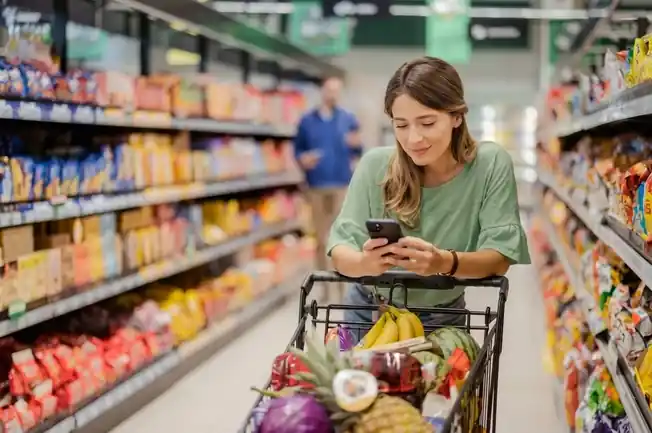
Nearly four in ten shoppers, 39%, say they’re comparing prices more carefully before they buy, according to Salsify’s 2026 Consumer Research. That’s not some fringe habit anymore. About 30% say they’re checking more retailers than they did two or three years ago, and 27% say they’re spending more time researching before committing to a purchase, per BigCommerce’s 2026 Holiday Trends report.
That number keeps climbing. By April 2026, 63% of shoppers told Attentive’s Consumer Pulse survey they were comparing prices more carefully than before, up from earlier tracking that same year. US shopping habits are shifting fast, and every recent consumer shopping behavior report points the same direction: people aren’t loyal by default anymore. They’re loyal because they checked first.
The Friction Behind the “Trust Paradox”
USA TODAY’s Most Trusted Brands 2026, produced with Plant A Insights Group, surveyed more than 23,000 US consumers across over 4,800 brands between September and October 2025. It’s one of the largest studies of its kind, and it says something clear: Americans still have brands they trust deeply. Morning Consult’s own 2026 rankings, drawn from a separate tracking study of more than 3,200 brands between January and May, put Dawn Dish Soap at number one for the second year running, with Band Aid second and Google third.

So trust isn’t the problem. What customers prefer hasn’t really changed, they still gravitate toward names they recognize and feel good about. The real problem shows up somewhere else entirely. According to SCAYLE’s 2025 study of more than 1,500 US shoppers, 81% abandoned a brand last year, not because they stopped believing in it, but because of friction: a slow site, a clunky checkout, a missing payment option.
That’s the real story behind the importance of a brand to its customers in 2026. A trusted name buys you the first click. It doesn’t buy you the sale if the experience underneath it doesn’t hold up. Brand preference used to survive small annoyances. It doesn’t anymore, not when a better checkout is one tab away.
Why Shoppers Are Comparing More: The Three Real Drivers
Three forces are behind this shift, and they’re feeding off each other. Tighter budgets, smarter tools, and more places to shop are all pushing shoppers toward comparison instead of habit.

Inflation Is Forcing the Comparison
Money worries sit at the center of this shift. By late 2025, 37% of US consumers named rising prices as their single biggest concern, a sharp jump from just months earlier, according to Numerator’s 2026 outlook. That pressure hasn’t let up. It’s reshaping how inflation is affecting consumer shopping behavior at nearly every income level, not just the households already stretched thin.
Purchasing habits back that up without much ambiguity.
- 86% of US adults agree that most things are too expensive, and 69% say they often feel like they’re living paycheck to paycheck (Simmons, August 2026)
- 35% have switched from name brands to generic products, a habit that’s held steady since 2024 (Simmons)
- US consumer sentiment fell to a two year low in the second quarter of 2026, with optimism dropping to just 35% (McKinsey)
- Customer spending behavior is bending toward stretching each dollar rather than cutting spending outright
AI Is Doing the Comparison Shopping For Them
AI has quietly become part of the comparison process itself. 42% of consumers now use AI tools to shop, according to NIQ’s May 2026 data, and a separate McKinsey update from March 2026 puts the number even higher: 62% of US consumers now use tools like ChatGPT, Perplexity, and Google AI Overviews to compare brands and research product categories before they buy. That’s one of the clearest trends in consumer behavior this year, a shift from typing a brand name into a search bar to asking a chatbot to do the comparing instead.
Trust hasn’t caught up to adoption, though. Alchemer’s 2026 Retail Report found that 48.5% of shoppers used an AI tool to research a purchase in the past year, yet only 35.4% actually trust what it tells them. Gartner’s January 2026 survey of 322 US consumers found the same hesitation in a different form: just 31% were willing to let AI narrow their choices for household supplies, and only 28% felt that way about electronics. People want AI to compare. They don’t want it deciding for them.
More Channels Mean More Research Before Buying
More channels means more chances to compare, and shoppers are using every one of them. Where someone might have once walked into a single store and bought on sight, they’re now checking multiple channels before they reach checkout. That’s the target consumer behavior shift retailers are scrambling to keep up with, and the shopping behaviors behind it show up clearly in the data.
- More than half of shoppers research two to three channels before buying everyday essentials, and about 40% do the same for big ticket items like furniture or electronics (Salsify)
- 63% of shoppers said they became more selective because of higher prices during the 2026 post holiday period, according to an ICSC survey cited in TruRating’s Q1 2026 report
Brand Loyalty Is Splitting by Generation
Brand loyalty by generation doesn’t look like one trend right now. It looks like three different ones happening at once. Gen Z brand loyalty is the most fragile of the bunch, quick to try something new and just as quick to leave. Millennials sit closer to the other end, more willing to stick with a single brand once they’ve picked one.

Then there’s Gen X, a generation that gets talked about the least but spends like it matters most. That gap says something real about where brand loyalty trends are actually headed. Younger shoppers switch the fastest. Older ones still hold a disproportionate share of the spending power.
- Gen Z: 32% abandoned a brand within a 12 month period, the highest rate of any generation tracked (Capital One Shopping’s analysis of Statista data)
- Millennials: 20% say they buy exclusively from one preferred brand, more than any other generation (same source)
- Gen X: just 19% of the population, yet 31% of both in store and online retail sales (UPS Retail Consumer Trends 2026)
Why Loyalty Programs Aren’t Stopping the Switching
Loyalty programs still work, right up until they don’t. Most shoppers say a rewards program is the reason they stick with a brand in the first place. Points, tiers, and perks give people a concrete reason to come back instead of comparing every time. That’s a big part of why loyalty programs fail less often than critics assume, at least at the start.
The trouble shows up later. A rewards program only holds someone’s attention as long as it feels worth the effort. The moment redemption feels slow, or a competitor’s version looks more generous, that same shopper is switching brands without much hesitation, loyalty program or not. That’s the real lesson behind the importance of brand loyalty in modern marketing: a program can earn someone’s business, but it can’t force them to stay once a better option shows up.
What’s Actually Driving the Decision This Shopping Season
Ask what factors are affecting consumers this shopping season, and the answer is remarkably consistent across every survey: price, price, and price again. A June 2026 back to school survey of 1,000 US shoppers by Snipp found shoppers leaning hard into discount retailers, lower cost brands, and more careful price comparison than in past years. Consumer values and behaviors in the US haven’t shifted toward some new ideal. They’ve narrowed toward whatever stretches a budget furthest.
- Back to school 2026: 41.8% shopping at discount retailers, 40.1% buying lower cost brands, 38.8% comparing prices more carefully (Snipp)
- Categories seeing the most AI-assisted comparison shopping: apparel and food/beverage each account for 30% of AI-researched purchases over $50, followed by toys at 20% (via MarTech/Product.ai)
Even the answer to what people buy the most points to the same categories. Apparel and groceries are exactly where shoppers do the heaviest comparing before checkout.
FAQs
Why is consumer demand shifting right now? It’s shifting toward caution more than change. Shoppers are still buying, but they’re pausing longer beforehand. Higher prices and easier access to comparison tools mean people spend roughly the same amount overall, just spread across more research and more retailers before they commit to a purchase.
Why do loyalty programs struggle to hold onto members? A rewards program earns a shopper’s first commitment, not their permanent one. Once redemption feels slow or a competitor’s perks look better, that shopper compares again just as easily as someone with no loyalty program at all. Programs work as a starting point, not a guarantee.
Which generation is least loyal to brands? Gen Z. According to Capital One Shopping’s analysis of Statista data, 32% of Gen Z shoppers abandoned a brand within a 12-month period, the highest rate of any generation tracked. They’re quick to try something new and just as quick to move on if it doesn’t hold up.
Sources
- Salsify — 2026 Consumer Research
- BigCommerce — 2026 Holiday Trends
- Attentive — Consumer Pulse Survey, April 2026
- USA TODAY Most Trusted Brands 2026, with Plant-A Insights Group
- Morning Consult — Most Trusted Brands 2026
- SCAYLE — “What’s Killing Conversions for Enterprise Brands?” 2025, n=1,500+
- Numerator — 2026 Outlook
- Simmons (mrisimmons.com), August 2026
- McKinsey — US Consumer Sentiment, Q2 2026
- NIQ — May 2026 data on AI shopping tool adoption
- McKinsey — March 2026 update on AI comparison-shopping tools
- Alchemer — 2026 Retail Report
- Gartner — January 2026 survey, n=322 US consumers
- ICSC survey, via TruRating Q1 2026 report
- Capital One Shopping — Brand Loyalty Statistics 2026 (Statista-attributed figures)
- UPS — Retail Consumer Trends 2026
- Snipp — Back-to-School 2026 Survey, n=1,000 US shoppers
- MarTech / Product.ai — AI-assisted comparison shopping by category