
How Deal Seeking Became the Default Consumer Behavior? Deal seeking has become a normal part of how many Americans shop, with consumers increasingly comparing prices, waiting for offers, and looking for better value before completing a purchase. From loyalty programs to sales and brand comparisons, shoppers are becoming more deliberate about when and where they spend, making value an increasingly important part of the buying decision.
Key Takeaways
- 74.5% of Americans now call themselves more deal driven than a year ago, per Zamplia’s April 2026 survey.
- Deloitte’s “value seeker” spans income levels: 49% of Gen X and 43% of Baby Boomers qualify, not just budget shoppers.
- Loyalty programs are now the top deal discovery method, ahead of sale events and social media influencers.
- 61% of shoppers have switched brands over a sale, and over a quarter never returned to the original brand.
A pair of running shoes sits in your cart for eleven days. You’re not broke, and you’re not indecisive. You’re just waiting, because you already know the 30% off email is coming, and paying full price now would feel less like a purchase and more like a mistake.
That’s not casual bargain hunting. It’s the default setting for how a lot of people shop now, and it’s consumer driven rather than something retailers invented out of nowhere. Zamplia surveyed 294 U.S. shoppers in April 2026 and found that 74.5% say they’re more deal driven today than they were twelve months ago. Waiting for a markdown used to be the exception. Right now, it’s the rule most shoppers live by.
What Counts as “Deal Seeking” Now
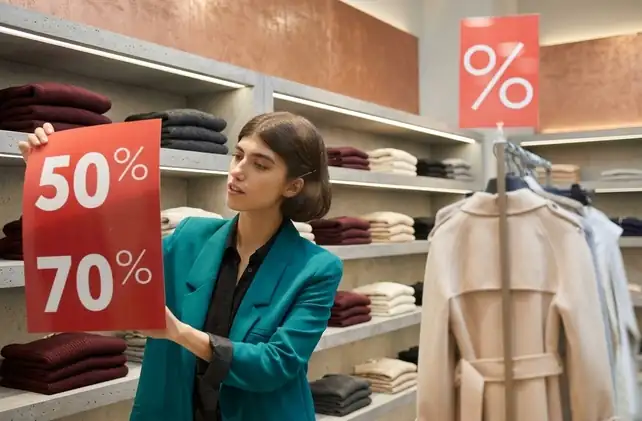
Deal seeking used to mean clipping coupons or waiting for the one sale weekend a year. It was a specific activity, something you did on purpose, separate from regular shopping. That’s changed. For a lot of shoppers, the assumption comes first: this will go on sale eventually, so why buy it today? Deal hunting isn’t a side quest anymore. It’s baked into the decision before the decision even happens. The question shifted from “is this a good deal” to “why would I pay full price at all,” and that’s a different kind of consumer value calculation than the one brands were built around.
The Data: How Widespread This Actually Is
Price Sensitivity Is Now the Norm, Not the Exception
Look at how seasonal promotions and discounts actually shape consumer purchasing decisions in 2026, and the picture gets specific fast.

- 39.8% of Americans rarely or never buy non essential items at full price, and only 21.7% often or always pay sticker price (Zamplia, April 2026)
- 72% say price and discounts influenced where they made their most recent purchase (PYMNTS Intelligence, n=2,100+ U.S. consumers)
- 55.8% refuse to pay full price for clothing and footwear, and 54.8% say the same about electronics (Zamplia, April 2026)
Who the “Value Seeker” Is Today
Deloitte has a name for this behavior: the value seeker. Their ConsumerSignals research, based on interviews with roughly 8,000 to 9,000 U.S. adults, September 2024 to spring 2025, found that 4 in 10 Americans qualify. That’s a specific bar, someone who shows three or more cost conscious, deal driven, or convenience sacrificing behaviors every month across grocery, restaurants, travel, and cars. It’s not only a younger generation habit either. Nearly half of Gen X and Baby Boomers meet it, and nearly 3 in 10 value seekers are young families earning six figure incomes. Consumer value, in other words, isn’t something only budget strapped shoppers chase anymore. Deloitte’s U.S. Consumer Value-Seeking Index stayed above its 100 baseline from January 2025, peaked in April 2025 around the “Liberation Day” tariffs, and dipped slightly in May, according to eMarketer’s June 2025 coverage, according to eMarketer’s coverage of the index.
Why Deal Seeking Became the Default
Economic Pressure Set the Baseline
The catalyst isn’t a mystery. Rising prices did most of the work. In Zamplia’s April 2026 survey, 83.3% of respondents said higher prices this year made them more deal conscious than in previous years. Inflation gets blamed for a lot of things, and tariffs added another layer of pressure heading into 2026, squeezing the same households from a second direction. None of this is really about frugality as a personality trait. It’s consumer driven behavior responding to a specific, traceable cause. Prices climbed faster than paychecks did, so people adjusted the one variable they could control: when and where they bought things. Waiting for a discount stopped being optional and started being math.
Technology Removed the Friction of Finding a Deal
Deal hunting also got a lot easier to do without trying very hard. Zamplia’s data shows loyalty and rewards programs are now the top way people find deals, ahead of everything else. Here’s how the rest breaks down:

- Loyalty or rewards programs, 35%, the single most common deal discovery method
- Waiting for major sale events like Black Friday or Prime Day, 23.5%
- Social media influencers or creators, 17%, with a sharp generational split: 26% of 18-24 year olds rely on influencers to find deals, compared with just 6% of shoppers 55 and older
It required brands to show up in more places at once, and deal hunting simply followed the path of least resistance.
The Psychology Behind It: Why It Feels Different From Just Saving Money
There’s a tension under all of this worth naming. You want the product now, but you also don’t want to feel like you overpaid later. That’s consumer tension in its purest form, and a discount resolves both sides of it at once. What’s clearer is the social shift around it.
Deal seeking used to carry a faint whiff of embarrassment, like admitting you couldn’t afford full price. That’s mostly gone. A lot of shoppers now see themselves as skilled consumers rather than bargain hunters, people who understand how retail pricing works and refuse to get played by it. Sharing a deal with friends isn’t a confession anymore. It’s closer to a flex.
The Economics Underneath the Behavior
Strip away the psychology and there’s a simpler economic story running underneath it. Economists talk about demand shifting for a few reasons, and two of them explain a lot of what’s happening here. One is income. When prices rise faster than paychecks, people’s willingness to buy a product doesn’t disappear, but their ability to buy it at the old price does. So they wait, they substitute a cheaper version, or they hunt for a lower price instead of walking away entirely.
The other piece is what shapes demand from the other direction: taste. Waiting for a deal used to signal patience. Now it signals a kind of literacy about how prices actually move. In a market economy, the personal decisions of consumers and firms are based on the price signals both sides are watching, and right now, consumers are watching those signals far more closely than they used to.
How Retailers Are Responding
Loyalty Programs Became the New Front Door
Retailers noticed the shift and moved fast on loyalty. EY’s Future Consumer Index, a global survey of 23,000 (14th edition, March to April 2024, 23,016 consumers in 30 countries) people across 30 countries including 1,500 in the U.S., found that 49% of U.S. consumers would download a brand’s app for loyalty promotions or exclusive deals. Another 70% of U.S. consumers would join a loyalty program for free shipping. That’s not brand loyalty in the old sense, where someone sticks with a company out of habit or affection. It’s transactional, and both sides know it. Brands get the download and the data. Shoppers get first access to the next markdown.

Not Every Discount Is Priced the Same Way
Not every discount carries the same weight, and retailers know this better than shoppers do. Pricing firm Pricen calls certain products Key Value Items, or KVIs: products whose price disproportionately shapes how a shopper judges a store’s overall value.
- KVIs tend to be items people buy often and remember the price of, milk, sneakers, phone chargers, the things you’d actually notice if the price jumped
- Everything outside that narrow list has more room to move, which is where retailers quietly protect margin while still looking “cheap” on the products people track closely
That’s why one discount can make a whole store feel affordable while a hundred others barely register.
The Loyalty Trade Off: What Brands Risk
The flip side of a consumer driven market is that loyalty gets thinner. Zamplia found that 61% of shoppers have switched brands at least once because a competitor was running a sale, and 26.2% of those switchers never went back to the original brand at all. That’s more than a quarter of a customer base, one competing promotion away from leaving for good.
- 61% have switched brands because of a sale; 26.2% switched and never returned
- 33.7% say they feel priced out and look for alternatives when a brand never discounts, while 24.1% actually respect a no discount stance as a sign of quality and confidence
Holding the line on price isn’t automatically a losing move. It just depends entirely on which third of your customers you’re talking to.
What This Means If You’re a Value Seeker Yourself
None of this means every deal is actually a deal. Being a smart value seeker takes a little more than clicking the first coupon code that pops up.
- Track price history before trusting a “deal” tag. A lot of markdowns are just the price creeping back to where it started.
- Learn which categories a retailer treats as KVIs, so you can tell a genuine discount from a loss leader designed to get you in the door.
- Separate an actual need from an impulse triggered by urgency messaging like “only 2 left” or a countdown timer.
- Use loyalty programs on purpose, not out of habit. The data behind them works both ways.
Deal hunting works best when you’re the one setting the terms, not the retailer’s checkout page.
Frequently Asked Questions
Is deal seeking really the new normal, or is this temporary?
The data leans toward permanent. Zamplia found 74.5% of Americans already describe themselves as more deal driven than a year ago, and Deloitte’s Value Seeking Index held above its 100 baseline from January to May 2025, per eMarketer (June 2025). Nothing in the current numbers points to a quick reversal.
Which product categories do people resist paying full price for most?
Clothing and footwear top the list, with 55.8% of shoppers refusing to pay sticker price, followed closely by electronics at 54.8%, according to Zamplia’s April 2026 survey. Both categories see frequent, predictable sales, which trains shoppers to wait them out.
Do discounts actually make people spend more, not less?
Often, yes. The urgency built into limited time offers can push people toward purchases they hadn’t planned, tapping into the same reward response psychology researchers link to other kinds of winning. A “deal” can turn a maybe into a yes faster than a fair price alone would.
What happens to brands that refuse to discount?
Opinion splits fairly evenly. Zamplia found that 33.7% of shoppers say they’d feel priced out and go looking for alternatives, while 24.1% actually respect a no discount policy as a signal of quality and confidence. Whether it works depends heavily on how strong the brand’s identity already is.
Sources
- Zamplia — “Deal-Driven Consumer Behavior,” April 2026, n=294
- PYMNTS Intelligence, Consumer Inflation Sentiment Report, n=2,100+
- Deloitte Insights — The value-seeking consumer, ConsumerSignals, n=8,000
- eMarketer — on Deloitte’s Value-Seeking Index and April 2026 tariffs
- EY Future Consumer Index, via Retail Customer Experience
- Pricen — KVI Retailer Guide