


Is Hard or Soft Luggage Better? Choosing between hard or soft luggage shouldn’t take hours of research. This guide cuts through the noise, gives you a clear answer based on how you actually travel, and walks you through materials, packing realities, and a scenario based decision framework so you can buy with confidence.
Key Takeaways
Whether hard shell luggage or soft shell luggage is better depends entirely on how you travel, but the answer is straightforward once you know your pattern.
- Checked bags and cruises → choose a polycarbonate or aluminum hard shell for crush protection and water resistance.
- Carry on and business trips → choose soft sided luggage for lighter weight, external pockets, and flexible packing space.
- Materials matter more than type: polycarbonate and ballistic nylon outlast budget ABS and polyester by years.
- Fragile items and bad weather favor hard shell; quick access and flexible packing favor soft shell.
- A decision framework table below walks you through specific travel scenarios so you can stop guessing.
Hard or Soft Luggage: Quick Answer
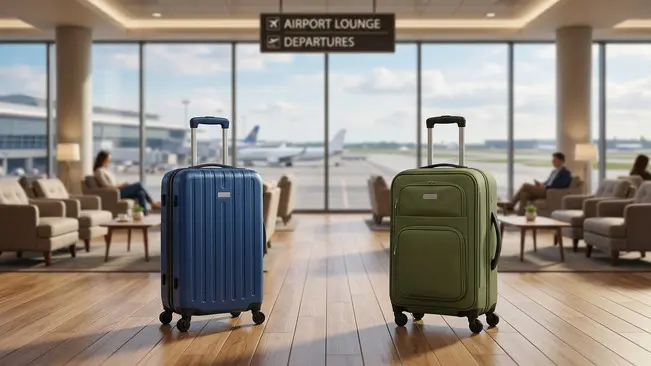
For checked luggage on international flights, long haul trips, and cruises, hard shell luggage is your best bet, it handles rough baggage systems, stacking, and wet tarmacs far better. For carry on luggage, weekend getaways, and frequent business travel, soft luggage wins thanks to lighter weight, exterior pockets, and the ability to compress into a tight overhead bin.
Travelers who often carry fragile items like cameras, wine bottles, or electronics should lean hard shell. If you mostly pack clothes and soft belongings, a quality soft shell will serve you well.
Many frequent travelers end up owning both: a hard sided suitcase for checked trips and a soft shell carry on for shorter ones. This article helps you decide which to buy first as new luggage.

Hard Shell Luggage: What It Is and When It Wins
Hard shell luggage, also called hardside luggage, features a rigid outer shell made from ABS, polycarbonate, or aluminum. ABS is the lightest and cheapest but least durable, prone to crack at corners. A polycarbonate shell is the most common premium option: flexible under impact, very crack resistant, and built for years of rough handling. Aluminum luggage is extremely strong but heavy and will dent permanently over time.
- Hard shell bags protect fragile items better against crushing and stacking, making them ideal for checked luggage on flights and cruise ship loading.
- Hard shell luggage is more weather resistant than soft shell, rain beads off the surface on wet tarmacs, though water can still enter through zippers and seams. No suitcase is fully waterproof.
- Most hard shell suitcases have TSA approved combination locks, making them generally more secure than soft sided bags.
- Hard shell luggage is more resistant to bed bugs than soft shell because pests can’t burrow into rigid plastic or metal.
- The clamshell design splits into two halves and needs a flat surface to open, which takes more space in hotel rooms or small cabins.
- Trade offs are real: fewer or no external pockets, fixed packing space with no overstuffing, visible scuffs and scratches (matte finishes help), and a heavier empty weight, hard shell carry ons weigh 7–9 lbs empty. Aluminum shells push that even higher.
- Hard shell is the pick for travelers who check bags on international routes, carry breakables, or sail on cruises where baggage stacking is standard practice.
Soft Luggage: What It Is and When It Wins
Soft sided luggage is built from woven fabric, polyester at the budget end, nylon in the mid range, and ballistic nylon or ripstop nylon for premium durability and tear resistance. The fabric construction is what gives these bags their defining flexibility.
- Soft shell luggage is lighter, averaging 5–7 lbs empty, roughly 2–4 lbs less than comparable hard shell bags. That weight difference matters on budget airlines with strict limits.
- Soft suitcases can flex, compress, and slightly bulge, which helps squeeze into tight spaces like overhead bins and small car trunks.
- External pockets are the big advantage. Quick access to laptops, documents, chargers, and toiletries makes a soft carry on incredibly handy for business travel and frequent flying. Travelers love not having to open the entire bag at security.
- Many soft sided suitcases have expandable zippers offering 15–25% extra packing space, perfect for the return trip loaded with souvenirs or extra items.
- Downsides: less protection for fragile items, more vulnerable to slashes and theft attempts at zippers (soft shell luggage typically lacks built in locks, requiring external ones), and fabric can absorb moisture and stains in heavy rain.
- Soft luggage is the right pick for carry on only trips, road trips where you constantly load and unload, regional flights with tight bins, and travelers who prefer organization and access over crush protection.
Material Deep Dive: What Your Shell Is Actually Made Of
The material decides how long the bag lasts and how it handles stress. Don’t just ask “hard or soft?”, ask “what’s it made of?”

- ABS hard shell: Budget plastic. Light and inexpensive, but more likely to crack at corners from sharp impacts. Fine for occasional trips, not for constant checked bag duty.
- Polycarbonate hard shell: The gold standard. Polycarbonate hard shells are significantly more crack resistant than ABS, flex under impact instead of shattering, and last 5–10 years of frequent checked use. Worth the higher price.
- Aluminum: Premium, crush proof, and extremely cut resistant. But it’s the heaviest option, shows cosmetic dents, and suits travelers who don’t worry about visible wear. The sleek look appeals to many, but the weight trade off is significant.
- Polyester soft shell: Affordable but the least abrasion resistant fabric. Suitable for occasional travelers who mostly use a small carry on and don’t overstuff.
- Nylon (ballistic nylon, ripstop nylon): Far tougher fabric. Ballistic nylon resists cuts and abrasion; ripstop prevents small tears from spreading. This is the smart pick for frequent travelers and heavy use.
Practical rule: if a bag will be checked often or dragged across rough surfaces at a train station, favor polycarbonate hard shell or ballistic/ripstop nylon soft shell, even if the initial price stings. Protection varies significantly between hard luggage and soft luggage at every price point.
Packing, Space, and Access: Living With the Bag Day to Day
How the bag opens and organizes your stuff daily matters as much as how tough the shell is.
- Hard sided luggage typically uses a 50/50 clamshell design, giving two shallow interior compartments. Great with packing cubes, but you need a bed or wide floor space when the bag opens fully. Hard luggage requires more space to open and pack due to this layout.
- Soft luggage usually offers one large main compartment that packs like a trunk, easier for bulkier items like jackets, shoes, or packing for a family where everything goes into one big space.
- Soft sided bags often add multiple compartments for organization plus pockets on the outside, ideal for organizing chargers, documents, and quick grab items. Soft shell luggage often has more compartments for organization than hard alternatives.
- Hard shell bags rarely have external pockets, so flyers must rely more on a personal item, a backpack or tote, for in flight essentials and laptop access.
- Overpacking reality: soft luggage can stretch, and many models expand for more space. Hard shell luggage has a fixed frame that stops bulging but can force tough choices on long trips.
- For checked luggage, the disciplined packing space of a hard sided suitcase prevents “exploding suitcase” scenarios. But carry on travelers who constantly dig for items mid journey generally prefer soft luggage.
Durability, Security, and Weather: Which Lasts Longer in Real Use?
Durability isn’t just about the shell or fabric, it’s the zippers, wheels, and handles that often fail first. Still, the outer material sets the baseline.
- Polycarbonate and aluminum hard shell luggage handle crushing and stacking better than any soft fabric. This is critical in checked baggage holds and cruise ship cargo areas. Hard shell luggage is generally more durable and crush resistant.
- ABS hard shell can crack after repeated rough handling, while good ballistic or ripstop nylon softsided luggage may simply scuff but keep working. Material quality within each luggage type matters enormously.
- Soft fabric can tear or seams can split if snagged, soft shell luggage is vulnerable to ripping and fraying seams, but many of those issues are repairable. Serious hard shell cracks are usually permanent.
- Security: hard shell cases with integrated TSA locks and latch systems resist opportunistic theft better. Hard shell luggage is generally more secure than soft shell. But zippers on both types can be forced with basic tools.
- Weather: hard shell sheds rain on wet airport tarmacs and ferry decks. Soft side luggage can soak through in sustained rain unless treated with durable water repellent spray. Hard shell luggage can withstand rough baggage handling and weather exposure more reliably.
- For trips involving repeated connections, baggage transfers, and rough handling, prioritize a polycarbonate hard shell or heavy duty nylon soft shell with reinforced corners and quality zippers. Don’t cheap out on hardware.
Scenario Guide: Hard Shell vs Soft – What to Choose for Your Trip
Stop debating hard shell vs soft in the abstract. Use this table to match your trip type to the right luggage choice at a glance:
| Travel Scenario | Best Choice | Why |
| International checked luggage (long haul airlines) | Polycarbonate hard shell | Impact protection, water resistance, security on the luggage carousel |
| Carry on only on budget airlines (Ryanair, AirAsia) | Soft shell carry on | Lighter weight, compresses into strict overhead bin limits |
| Cruises (Miami, Barcelona, Sydney ports) | Hard shell checked bag | Survives stacking in ship holds, easy to wipe clean |
| Frequent business travel with laptop | Soft shell with external pockets | Quick access to devices and documents at security |
| Road trips and train travel | Soft luggage or duffel | Easy to stuff into trunks and overhead racks |
| Protecting fragile items (camera gear, glass, souvenirs) | Hard shell checked luggage + internal padding | Crush proof shell keeps breakables safe |
| Mixed travel style (checked + carry on) | Hard shell checked + soft carry on | Best of both worlds |
Your best bet is matching your most common travel style, not your rarest trip.
FAQ: Hard vs Soft Luggage
These questions cover concerns that go beyond the basics above.

Is hard or soft luggage more durable in the long run?
High quality materials matter more than the category. A polycarbonate hard shell lasts roughly 5–10 years of frequent checked use, while premium ballistic nylon soft luggage holds up for 3–7 years. Hard shell resists crushing better but can suffer unfixable cracks, while a durable soft bag may fray yet remain usable or repairable. Frequent checked bag travelers get more consistent protection from polycarbonate; frequent carry on users often get longer practical life from tough nylon.
Which is better for international travel: hard or soft luggage?
For international checked luggage, hard shell is usually better, rougher handling, longer flights, and weather exposure on tarmacs all favor a rigid shell. For international carry on, a lightweight soft bag can be smarter because it fits better, weighs less, and offers quick access pockets for passports. The ideal setup for long haul travelers: a hard shell checked suitcase paired with a soft shell carry on.
Which is better for carry on luggage: hard shell vs soft?
Most travelers will be happier with a soft carry on. It’s lighter, compresses into tight overhead bins, and has pockets for laptops and travel documents. Travelers who carry fragile electronics in their carry on might prefer hard shell for extra crush protection, provided they accept the extra weight. Always check airline carry on size rules, a hard sided suitcase has zero “give” if dimensions run tight.
How do I clean and maintain hard and soft luggage?
Hard shell luggage requires a damp microfiber cloth and mild soap for cleaning. Scuffs and scratches show easily but can often be buffed out with non abrasive cleaners. Soft shell luggage can be cleaned with warm water and mild soap, never machine wash it. Reapply DWR spray on soft shell luggage every 6–12 months to maintain water resistance. For both types, regularly inspect wheels, zippers, and handles. Zipper maintenance on hard shell luggage can prevent failures before they strand you mid trip.
If I only buy one new luggage piece in 2026, should I go hard or soft?
Travelers who usually check bags or go on cruises should start with a medium or large polycarbonate hard shell suitcase, it will protect your belongings through years of rough handling. Travelers who mostly take short trips with carry on only should start with a soft shell carry on featuring quality nylon fabric and several external pockets. Think about your next 3–5 planned trips and buy for the pattern, not the exception. Once you’ve decided between hard and soft, see our guide to the best suitcase brand to pick the specific brand that matches your budget and travel style
Sources & References
This guide is based on material testing data, independent luggage reviews, and verified airline size and weight regulations. Key references: