
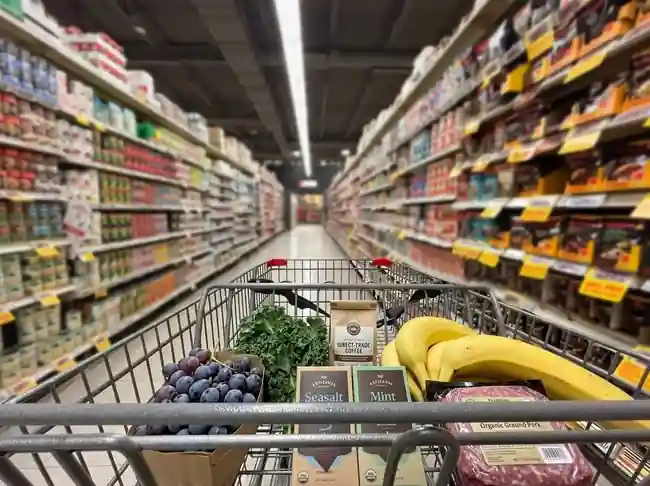
The psychology behind bigger shopping baskets is more complex than simply giving shoppers a larger cart. Store layout, available choices, empty space, comfort, and the way shoppers think about spending can all influence how much they buy. Research also suggests that cart size alone does not guarantee bigger purchases, making shopper behavior and the shopping environment important factors in basket growth.
Key Takeaways
- The famous “40% more sales” cart size claim traces to one unverified 2011 experiment, not peer reviewed research.
- Peer reviewed data shows basket size correlates with store format and SKU variety, not cart size alone.
- Empty space, mental accounting, and cart comfort all shape how much shoppers add without noticing.
- Digital cart ads lift sales of both the advertised product and unadvertised items in the same category.
Martin Lindstrom told Today back in 2011 that when he doubled the size of a shopping cart in an experiment, people bought 40% more. He’s repeated the number in his book Brandwashed and in a piece for Harvard Business Review since. It’s one of the most quoted stats in retail psychology. It’s also never been published as a peer reviewed study, with a sample size or a methodology anyone can check. That gap between “widely repeated” and “actually proven” is where this article starts, and it’s worth sitting with before you accept any cart size claim at face value.
What Is Basket Size in Retail?
Basket size, sometimes called average basket size or ABS, is simply the number of units a customer buys per transaction. You get it by dividing total units sold by total transactions. Retailers track it because it tells them something revenue alone can’t: whether people are buying more stuff, not just spending more money.
That distinction trips a lot of people up. Basket size measures items. It’s a different number from the ones retailers usually lead with in earnings calls.
- Basket size: units per transaction, the raw count of what’s in the cart
- Average order value (or ticket size): dollars per transaction, a completely separate metric that’s often confused with basket size
- Basket completion: whether a shopper who started filling a cart or basket actually finishes the purchase, rather than abandoning it
Basket Size vs. Order Value: Why the Difference Matters
A bigger basket doesn’t automatically mean bigger revenue. If shoppers fill their cart with more items but skew toward cheaper substitutes, private label instead of name brand, generic instead of premium, basket size can climb while the dollar total barely moves, or even drops. That’s why a retailer chasing “basket size” as a goal without watching order value can end up celebrating the wrong number.

Why Bigger Containers Change What You Buy
The mechanics behind this aren’t complicated once you see them named. Three forces do most of the work: how empty space feels, how people mentally track spending, and how comfortable the container is to fill. Each one nudges behavior a little differently.
The Empty Space Effect
Unfilled space in a cart or basket works as a visual cue, and it’s a strong one. A half empty cart quietly signals “you haven’t shopped enough,” which is exactly the kind of subconscious prompt that keeps hands reaching for items that weren’t on the list.
Flip the container size and the effect flips too. With a small basket, every item you add takes up a noticeable chunk of the space you have, so each addition gets weighed more carefully.

- Larger containers reduce the friction of adding “just one more thing,” because the space barely changes
- Smaller containers make each item feel like it matters more, which slows down impulse adds
Mental Accounting
People don’t track spending as one running total in their head. They sort it into categories, groceries here, treats there, and a bigger container quietly shrinks how much any single item seems to matter against the whole. Drop a $6 item into a cart that already holds $80 worth of groceries and it barely registers. Drop that same $6 item into a basket holding $15 worth of stuff and it feels like a real decision. The container size is doing psychological work before the shopper even reaches the register.
Comfort, Visibility and Ease of Filling
Container design isn’t just about capacity. How a cart feels to push and how easy it is to see what’s inside both shape how long someone shops and what they add.
- Comfortable, ergonomic carts reduce physical strain, which stretches out how long people linger in the store
- Clear visibility of items already in the cart can prompt more purchases, since shoppers can quickly gauge what’s missing
- Impulse items placed along the paths shoppers naturally take exploit both effects at once
Is the “Bigger Cart = 40% More Sales” Claim Actually True?
Here’s what that claim actually is: in 2011, marketing consultant Martin Lindstrom told Today he’d run an experiment doubling a shopping cart’s size and watched purchases jump 40%. He’s since repeated the figure in Brandwashed and in a Harvard Business Review essay. No published paper backs it up. No sample size, no control group, no peer review, nothing that lets an outside researcher check the work. It’s Lindstrom’s own account of his own experiment, retold by him in interviews and books.
That doesn’t make it false. It makes it unverifiable, which is a different thing entirely, and retail writers rarely bother to point out the difference.
What does hold up to scrutiny is a peer reviewed study analyzing roughly 9.4 million shopping baskets across about 63,000 US households over the course of a year (2016 data). It found average basket size tracks closely with how many SKUs a retailer stocks and what format the store is, supercenter, conventional grocery, club store, and so on, not with cart size in isolation.
- The anecdote: a self reported 40% jump from one marketing consultant’s 2011 experiment, with no published methodology
- The research: basket size correlates with store variety and format, based on a dataset of roughly 9.4 million real transactions across ~63,000 households
Treat the 40% figure as a compelling story worth repeating with a caveat attached, not as settled science.

What the Data Actually Shows About Basket Size
Strip out the anecdotes and a few solid numbers remain, drawn from retailers and research groups that actually publish their methodology.
Average Basket Size Benchmarks
Basket size varies a lot by format, and that variation tells you more than any single average number could.
- Conventional supermarket baskets run 15 to 30 items per trip, the most consistent figure across the sources that show their work
- Online shopping carts averaged 6.1 items in 2024 data, far lower than in store, since digital shoppers tend to buy with more intent and less browsing
- Gourmet and specialty grocery baskets run smaller still, 4 to 6 items per trip, because those shoppers are usually hunting specific ingredients, not restocking a whole kitchen
How Store Size Relates to Basket Size
Bigger stores tend to produce bigger baskets, and the reason isn’t mysterious. More square footage means more categories on the shelves, which gives shoppers more chances to add something they didn’t plan on.
- The average US supermarket runs 42,272 square feet, stocks about 33,248 items, and does roughly $668,377 in weekly sales
- Target’s average store measures 125,000 square feet, well beyond a typical grocery footprint, and larger formats like that tend to carry more categories under one roof
- That pattern lines up with the peer reviewed basket study mentioned earlier: retailers offering more SKUs generally post larger average basket sizes, independent of what size cart they hand you at the door
Does Shopping Cart Advertising Actually Drive Sales?
Cart size isn’t the only lever retailers pull. A growing body of research looks at what happens when the cart itself becomes an advertising surface, and the results are more measurable than the “double the cart” claim ever was.
What the Research Says About In Cart Ads
A 2026 study on smart shopping carts equipped with digital ad displays found something worth paying attention to: the ads didn’t just sell the advertised product.
- Digital ads mounted on smart carts increased purchases of the specific product being advertised
- The effect spilled over into other products in the same category, even ones that weren’t advertised at all
- Both centrally placed and peripherally placed ads beat no ad at all, but peripheral placement didn’t reliably outperform central placement
Basket vs. Cart: How Container Choice Changes Completion
The container a shopper picks up at the door shapes how the whole trip plays out. Someone carrying a basket compares items more carefully, because space runs out fast and every addition has a visible cost.
- Basket shoppers scrutinize purchases more, since limited space forces trade offs in real time
- Cart shoppers face less friction, which makes it easier to keep adding items, and easier to complete a bigger purchase, without ever really noticing the total climb
How to Increase Basket Size at Your Store
None of this is only academic. Retailers can act on it, and the tactics that actually work go well beyond “buy a bigger cart.”
Layout and Container Design
- Match cart and basket sizes to how people actually shop your store, quick trips need small options, weekly stock ups need room
- Put high margin impulse items along the paths shoppers naturally walk, not just at the checkout line
- Make sure items already in the cart stay visible, since visibility itself prompts more adds
In Store and Digital Advertising
- Digital, location aware prompts, whether on a smart cart screen or a shopping app, lift both the advertised product and adjacent items in the same category, backed by the 2026 spillover research above
- Static, printed cart ads are much harder to tie to actual sales. That’s a practitioner’s opinion voiced in industry forums rather than a data backed finding, but it’s worth weighing before investing heavily in that format
Bundling and Timing
Cross merchandising complementary items near each other nudges shoppers toward pairs they wouldn’t have thought to grab separately, pasta next to sauce, chips next to dip. Timing matters too. Shopify’s own BFCM 2025 data put the average cart price at $114.70 during that weekend, a real world data point showing how basket value climbs during known peak shopping periods, and a useful benchmark for planning promotions around your own seasonal highs.
Where the Line Is: Nudging vs. Manipulating Shoppers
Every tactic in this article works, and that’s exactly why it’s worth pausing on. Empty space, mental accounting, ergonomic carts, in cart ads, none of it is hidden or illegal. It’s just psychology applied deliberately, at scale, in a place most people don’t expect to be studied that closely.
Knowing how these nudges work cuts both ways. Retailers can use them to lift basket size, and shoppers can use the same knowledge to catch themselves reaching for something that was never on the list. Recognizing the empty space pull for what it is doesn’t require avoiding the store. It just means walking in with eyes open.
Quick Answers
What is basket size in retail? Basket size is the average number of items a customer buys per transaction. You calculate it by dividing total units sold by total transactions over a given period. It’s a different metric from order value, which tracks dollars rather than item count.
What’s a good average basket size for a grocery store? Conventional supermarkets typically run 15 to 30 items per trip. Gourmet and specialty grocers see much lower numbers, closer to 4 to 6 items, since those shoppers usually come in for specific ingredients rather than a full restock.
Does a bigger cart really make you spend more? The widely repeated “40% more” figure comes from a single marketing consultant’s self reported 2011 experiment, never published as peer reviewed research. What actual data shows is that basket size correlates with how many products a store stocks and its overall format, not cart size taken on its own.
Sources
- Today.com, 2011 — Martin Lindstrom’s original cart-size claim
- Martin Lindstrom — HBR-style essay repeating the 40% claim
- shopcarriage-trade.com — repeats the claim, does not verify it as a formal study
- ScienceDirect — “Fundamental basket size patterns and their relation to retailer performance”
- ScienceDirect — “Smart Mobile Advertising at the Point of Purchase: Digital Shopping Cart() Displays Increase Sales” (2026)
- FMI — Food Industry Facts (2025 supermarket benchmarks)
- Target Corporate — Inside Our Stores (average store size)
- Shopify — BFCM 2025 recap (average order value)
- Shopify — basket size definition and calculation guide
- BusinessDojo — supermarket basket size benchmarks (Oct 2025)