
Why Trust Matters More Than Awareness Today: brand recognition alone can’t build the loyalty that delivered experience earns over time.
Key Takeaways
- Trust and relevance combine multiplicatively: Edelman found 71% category acceptance when both are present, versus 36% with neither.
- Data handling is now a trust precondition for tech brands, with most consumers refusing companies they don’t trust with data.
- Gen Z switches brands often, but price drives most switching, and loyalty programs still measurably reduce it.
- Southwest Airlines‘ scandal recovery took three years and $1.3 billion in IT investment, proving trust rebuilds slowly.
In May 2025, the Axios Harris Poll 100 put Trader Joe’s at the top of its annual corporate reputation rankings, with a reputational quotient of 82.1. Patagonia took second place at 82.0. Both companies spend comparatively little on the kind of mass advertising that builds unprompted brand recognition, yet they outranked companies that spend far more on exactly that. Recognition wasn’t what put them at the top.
That gap is the whole story. Awareness gets a company recognized. It doesn’t automatically make it a brand you can trust, and in 2026 the distance between the two keeps widening, according to global trust research covered below. What follows covers what trust actually is, why it works by a different mechanism than awareness, what the “trust frameworks” cluttering search results actually mean, and what a real scandal recovery costs once a company decides to earn its way back.
What Is Brand Trust, Really?

Qualtrics defines brand trust in fairly plain terms: it’s the confidence customers have that a brand will actually deliver on what it promises. That’s a useful starting point, but researchers and marketers both tend to split trust into two separate ingredients. Cognitive trust is the rational kind, the “does this product actually work” evaluation based on evidence and past performance. Affective trust runs on something closer to instinct, whether a brand feels like it’s on your side when it matters. A company can win one without the other, though the strongest brand trust holds both at once.
What is the brand trust theory, if there’s an academic answer to point to? It traces back to a 2001 Journal of Marketing paper by Chaudhuri and Holbrook, “The Chain of Effects from Brand Trust and Brand Affect to Brand Performance.” They defined brand trust as the average consumer’s willingness to rely on a brand’s ability to do what it says it does, then treated that reliance as a direct driver of loyalty and brand performance, not a soft feeling that happens to correlate with sales. Trust in their model isn’t a byproduct of good marketing. It’s the mechanism marketing is supposed to be building toward.

Why Awareness Isn’t the Same as Trust
The association principle is the standard advertising textbook term for what most awareness campaigns are actually doing. Link a product to a setting, a person, a cultural feeling, repeat that link often enough, and the brand borrows an association it hasn’t necessarily earned. It’s a real technique, and it works, that’s not in question here. What it isn’t is trust. Trust gets built through delivered experience over time, not borrowed through repetition, and the two mechanisms produce very different outcomes when a company tries to stretch into something new.
Edelman’s 2026 Trust Barometer Special Report, “Brand Growth in an Insular World,” put numbers behind that difference. Surveying 17,688 people across 15 nations, Edelman found that when a brand has neither trust nor relevance, only 36% of consumers will accept it expanding into a new category. Relevance alone gets that number to 53%. Trust alone gets it to 48%, doing more work on its own than relevance does. Put both together, and acceptance jumps to 71%, more than adding the two effects, closer to multiplying them.
The same report found something else worth flagging. For the more insular consumers Edelman tracked, unpaid voices, friends, family, someone described as “like me,” carry roughly five times the influence of paid brand messaging. That’s not surprising once you think about what a personal recommendation is actually doing: someone risking their own credibility to vouch for a brand, a cost paid advertising never has to carry. That’s the exact audience most awareness budgets are trying to reach, and it’s the audience least moved by the mechanism awareness campaigns rely on. Spend more on getting seen by that group, and the return keeps shrinking.

Trust Frameworks, Decoded: What the “C’s” and “Pillars” Actually Mean
Three of the phrases people search around brand trust point to actual frameworks. But not all three point to a framework built for brands, and one doesn’t quite exist as commonly described. Here’s what each one actually is.
BBB’s 4 C’s of Trust
The Better Business Bureau’s 4 C’s of Trust are real and specific to how a business operates, not a generic marketing concept. Character comes first, whether leadership behaves honestly and actually leads by example. Then there’s culture: do employees feel good about where the company is headed, or are they just showing up? Customers covers whether the business communicates clearly and meets the expectations it sets, and community rounds it out, whether the business is transparent about its local impact and respected for it. Put together, those four cover most of what determines whether a business earns trust close to home.
The “5 C’s of Trust”, Real, But Not Actually a Brand Framework
What are the 5 C’s of trust? The version that turns up in most search results, Credibility, Consistency, Competence, Character, and Connection, comes from workplace training materials built to teach managers how to earn a team’s trust, not how a company earns a customer’s. It’s a genuine, citable model. It just wasn’t built for brands. That said, each C maps onto brand trust cleanly enough to explain why it keeps getting misapplied. Credibility becomes don’t overpromise. Consistency becomes a predictable experience across every touchpoint. Stretch the other three the same way, and the leadership model starts looking a lot like a brand one, even though that was never the intent.
Is There Really a “7 Pillars of Trust” Model?
No. Search for “the 7 pillars of trust” long enough and you won’t find a canonical brand or business framework with that exact name and count, this looks like a common misremembering of a real model with a different number attached. The actual, widely cited framework is David Horsager’s 8 Pillars of Trust, laid out in his book of the same name: Clarity, Compassion, Character, Competency, Commitment, Connection, Contribution, and Consistency. Eight items, not seven. Rather than force a fake seven item version into this piece, it’s worth naming the real one and moving on, the same approach that works better than guessing at any framework that doesn’t actually exist.
How Businesses Build Stronger Consumer Trust
How do you actually build brand trust, in practice and not just theory? Every source in this research, Shopify, Qualtrics, Amazon Ads, converges on a similar list of factors that increase customer trust in a company, even when their language differs slightly from one guide to the next. None of it is exotic or hard to understand. Most of it just requires a company to do consistently, and publicly, what it already says it’s going to do.
Consistency across every touchpoint, packaging, customer service interactions, ad messaging, and the product itself, because inconsistency is what breaks cognitive trust the fastest, once a customer catches even one gap between the promise and the delivery.

Transparency about how the company operates day to day and how it actually handles customer data, not the softer kind of transparency that only shows up in marketing copy.
Product and service quality that genuinely matches what gets promised in the marketing. This is the single factor every source in this research agreed on, without exception, regardless of industry.
Values alignment. Amazon Ads’ Environics commissioned survey found that 81% of U.S. consumers say it’s important to buy from brands whose values match their own, and 62% say they already do exactly that.
Responsive, honest customer service, especially in the moment something’s already gone wrong, since that’s the moment most likely to define how a customer talks about the brand afterward.
Put those five together and what you get is a company that behaves the same way whether or not anyone’s watching, satisfying both the cognitive trust and the affective trust described earlier in this piece. None of it happens through a single campaign or a clever tagline. It happens through hundreds of small, unglamorous decisions that keep landing the same way, quarter after quarter, long after the launch campaign has stopped running.
Why Transparency and Data Privacy Matter More for Tech Brands
What are the top factors that build brand trust in tech companies specifically? Data handling sits above almost everything else on the list. Cisco’s 2024 research found that more than 75% of consumers won’t buy from an organization they don’t trust with their data, and Pew Research Center reported in 2023 that 81% of U.S. consumers are concerned about how companies actually use their personal information. Those aren’t fringe concerns anymore. For a tech or software brand, that number is close to a baseline expectation, not an edge case.
What role does transparency play in establishing brand credibility once you look at the perception gap underneath these numbers? Twilio’s 2021 research found that 79% of B2C business leaders believed their customers trusted their brand, but only 52% of consumers actually said they did, a 27 point gap between what companies assume and what customers report. Getting it wrong carries a real cost too. Vercara’s December 2024 survey found that 70% of consumers say they’d stop shopping with a brand after a security incident. For a tech company, data handling isn’t one trust factor sitting alongside the others. It’s closer to a precondition the rest of the list can’t matter without.
How Companies Measure Whether Customers Actually Trust Them
How do companies measure customer perception of trustworthiness, given that trust itself isn’t something you can read off a single dashboard? Qualtrics’ published measurement guidance points to four main tools: Net Promoter Score, which asks customers how likely they are to recommend a company to someone else; customer satisfaction scores, gathered right after a specific interaction; retention rate and customer lifetime value, which track whether people actually keep coming back; and review sentiment tracking, which reads the tone of what customers say publicly rather than just counting stars. None of these four measures trust directly. NPS captures willingness to vouch, not necessarily belief in a brand’s honesty. CSAT captures a single moment, not a pattern held over time. Retention can be inertia as much as it’s loyalty. That’s why companies tend to stack these measures instead of leaning on any one of them alone.
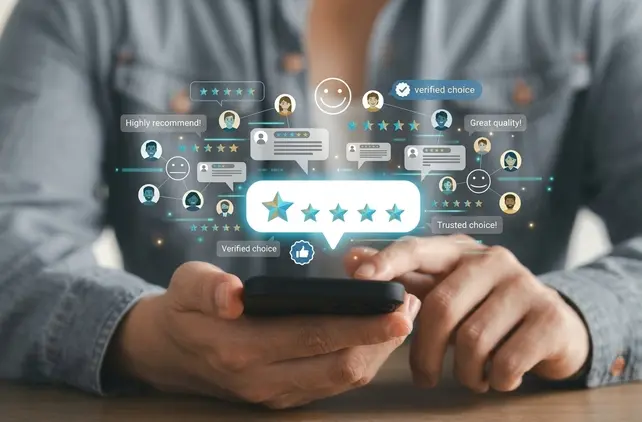
That review sentiment piece matters more than it sounds. BrightLocal’s data, compiled by DemandSage in 2026, found that 93% of consumers read online reviews before buying, and 53% say they trust reviews about as much as a personal recommendation from someone they know. That raises an obvious question: which online reviews actually reflect a brand’s trustworthiness, and how can you assess it before buying a product? Verified purchase reviews on third party platforms carry more weight than testimonials a brand hosts on its own site. Recent reviews outweigh old ones. And how a company responds to a negative review is its own trust signal, arguably a more honest one than the star rating sitting next to it.
Does Loyalty Still Follow Trust? The Gen Z Question
Are Gen Z consumers less brand loyal than everyone else, or does it just look that way? The raw switching data suggests yes, more than any other generation measured, but the story underneath those numbers is more tangled than a single headline can carry. Four numbers help explain what’s actually going on:
81% of Gen Z and Millennial consumers switched brands at least once in the past year, per the Salesforce Connected Shoppers Report (survey window November 27 to December 26, 2024, published March 2025).
66% of consumers, the same report found, name high prices as the top reason they stopped buying from a brand, not distrust on its own, which means price and trust are tangled together rather than separate forces.
84% of loyalty program members say the programs actually make them more likely to repurchase, per the same Salesforce data, meaning the mechanics still work even in a generation that switches often.
Roughly 4 in 10 Gen Z and Millennial consumers say they secretly use certain brands specifically to avoid social stigma, according to Edelman’s 2026 Trust Barometer Special Report, an identity driven layer of brand behavior older generations’ data doesn’t show the same way.
Put those together and a flat yes or no answer stops making sense. Gen Z switches brands more than older generations do, but price sensitivity is doing a lot of that work, not distrust by itself. Loyalty programs still measurably reduce switching within this same group, which says something real about effective strategies for developing brand loyalty going forward: this generation isn’t opting out of loyalty. It’s just more expensive to earn.
What Steps Companies Take to Regain Trust After a Scandal: A Real Case
What steps do companies actually take to regain brand trust after a scandal? Southwest Airlines is one of the more fully documented recent cases. In December 2022, a scheduling and de-icing failure canceled roughly 16,900 flights and stranded about 2 million passengers over the holidays. The fallout was severe by any measure: a record $140 million Department of Transportation fine, a reported $220 million Q4 2022 loss according to CEO Bob Jordan’s own earnings commentary, and an estimated total cost around $800 million once everything settled, per reporting from Thrifty Traveler in January 2023.
Southwest’s response wasn’t a statement, it was spending. The airline pushed its IT investment up by roughly $1.3 billion in 2023, about 25% above 2019 levels, funding a dedicated crew reassignment system, weather alert dashboards, pilot scheduling tools, and communication systems built to prevent the exact cascade that caused the meltdown, on top of the winter ground equipment the airline itself admitted it hadn’t had enough of at key airports. That’s the same distinction drawn earlier between trust and awareness: Southwest didn’t try to buy back its reputation through advertising. It rebuilt it through three years of operational decisions nobody was watching in real time, which is what delivered experience actually looks like once you get past the definition.
It worked, at least on the numbers that matter. The 2025 Airline Quality Rating, covering 2023 and 2024 performance and released in September 2025, ranked Southwest #1 among 10 major U.S. carriers and gave it the lowest complaint rate in the industry, 1.71 per 100,000 passengers. Forbes reported Southwest was “the only airline that improved every measure, every year from 2022 to 2024,” with on time performance climbing from 73.2% in 2022 to 78.6% in 2024. The Department of Transportation itself signed off on that recovery: of the original $140 million settlement, $35 million was structured as an actual cash penalty paid in installments, and in December 2025 the DOT waived the final $11 million installment outright, saying the move “incentivizes airlines to invest in improving their operations and resiliency.” That’s a regulator crediting the operational rebuild, not just the airline’s own PR. Still, the same Forbes reporting flagged something worth sitting with: Southwest’s newer baggage fee policy changes have already opened a fresh perception gap with customers. Trust recovery isn’t a one time fix. It has to hold up under every decision that comes after the one that caused the damage, not just the one that made headlines.
What This Means for Brands in 2026
Pull back from the individual sections above and a few clear patterns hold across all of them. None of this is exotic advice on its own, but it’s easy to lose track of after a long piece like this one, especially when the specific numbers start blurring together. Here’s the short version, worth keeping in one place:
Trust and relevance together outperform either alone. Edelman’s 71% versus 36% gap, cited earlier, shows the multiplier effect directly, not just an additive one.
The association principle still works well for getting a brand noticed in the first place. It just doesn’t substitute for trust, which only gets built through delivered experience over time, never through repetition alone.
Data handling is now closer to a trust precondition for tech and software brands specifically, not one factor sitting alongside the rest of the list.
Gen Z switches brands often, more than any other generation measured, but loyalty programs and trust still measurably reduce how often that happens. This generation isn’t opting out of loyalty. It’s just pricier to earn.
Recovering trust after a failure is slow and expensive by design. Southwest’s turnaround took roughly three years and a $1.3 billion jump in IT investment alone. There isn’t a fast version of this, no matter how the process gets marketed.
Frequently Asked Questions
What is the fastest way to build brand trust?
There isn’t a fast version of this. Southwest Airlines’ turnaround took roughly three years and a $1.3 billion jump in IT and operational investment, and that’s after a scandal, which tends to move faster than trust built from a standing start. The closest thing to a shortcut is consistency at the first customer touchpoint, since that’s where trust gets won or lost quickest.
Are Gen Z consumers really less brand loyal than older generations?
On raw switching behavior, yes. Salesforce’s Connected Shoppers Report found 81% of Gen Z and Millennial consumers switched brands at least once in the past year, more than older generations. But 66% named high prices as the top reason, not distrust, and 84% of loyalty program members said the programs make them more likely to repurchase.
How can I assess a brand’s trustworthiness before buying a product?
Check verified purchase reviews on third party platforms rather than testimonials the brand hosts itself, since those carry more weight. Look at recent reviews over old ones, and pay attention to how the company responds to negative reviews, not just the star rating. A brand that engages honestly with complaints is showing you more than a polished five-star average ever will.
Which online reviews best reflect a brand’s actual trustworthiness?
Verified purchase reviews on independent, third party platforms tend to be the most reliable, since they’re harder to fake than testimonials a company posts on its own site. Recent reviews matter more than older ones, given that products and service quality shift over time. Research compiled by DemandSage in 2026 found 93% of consumers read reviews before buying, and 53% trust them about as much as a personal recommendation.
How do loyalty programs impact brand trust?
They measurably reduce how often customers switch away, even among Gen Z and Millennial shoppers who switch brands more than any other generation. Salesforce’s Connected Shoppers Report found 84% of loyalty program members say the programs make them more likely to repurchase. Loyalty programs don’t replace trust, but they reward it consistently enough to keep customers from testing a competitor.
What role does transparency play in establishing brand credibility?
It closes the gap between what a company assumes and what customers actually believe. Twilio’s 2021 research found 79% of B2C business leaders thought customers trusted their brand, but only 52% of consumers said the same, a 27-point gap. Transparency about operations and data use is one of the more reliable ways to close that gap, since it gives customers something to actually check.
Is “the 7 pillars of trust” a real brand framework?
Not under that exact name. No canonical seven item brand or business trust framework exists in any citable source, this looks like a common misremembering of David Horsager’s actual 8 Pillars of Trust: Clarity, Compassion, Character, Competency, Commitment, Connection, Contribution, and Consistency. Eight items, not seven.
What steps do companies take to regain trust after a scandal?
Southwest Airlines is a documented example. After its December 2022 meltdown, which canceled roughly 16,900 flights and cost around $800 million total, it raised its IT investment by roughly $1.3 billion in 2023, funding crew scheduling systems, weather dashboards, and winter ground equipment. By 2025, it ranked #1 among 10 major U.S. carriers on the Airline Quality Rating, and the DOT waived the last installment of its fine that December, crediting the operational turnaround, though a newer baggage fee policy has already opened a fresh perception gap.
Sources
- Chain Store Age — “Trader Joe’s, Patagonia take top spots in corporate reputation rankings” — 2025 Axios Harris Poll 100, May 23, 2025
- Edelman — 2026 Trust Barometer Special Report: Brand Growth in an Insular World — 17,688 respondents, 15 nations
- Qualtrics — “Brand Trust: What It Is and Why It’s Important”
- Chaudhuri, A. & Holbrook, M.B. (2001) — “The Chain of Effects from Brand Trust and Brand Affect to Brand Performance,” Journal of Marketing, 65(2), 81–93
- CliffsNotes — definition of the association principle in advertising
- BBB — “The 4 C’s of Trust”
- University of Missouri CED — “The 5 C’s of Trust” job aid
- David Horsager — “The 8 Pillars of Trust: The Leading Indicator”
- Amazon Ads — “Brand Trust” guide, Environics-commissioned survey
- CDP.com — “Data Privacy & Brand Trust Statistics (2026)” — Cisco 2024, Pew Research 2023, Twilio 2021, Vercara December 2024 figures
- DemandSage — “30 Latest Online Review Statistics 2026” — BrightLocal sourced figures
- eMarketer — “Brand loyalty is fading among Gen Z and millennials” — Salesforce Connected Shoppers Report, survey window Nov 27–Dec 26, 2024, published March 2025
- Forbes — “Southwest Airlines Tops Industry Rating Amid Falling Airline Customer Service Scores”, September 14, 2025
- Thrifty Traveler — “Financial Fallout from Southwest’s Holiday Meltdown Spills into 2023”, January 2023
- CIO Dive — “Southwest Airlines targets more than IT in December meltdown analysis” — $1.3 billion 2023 IT investment increase, 25% above 2019
- CNN — “Southwest hit by record $140 million fine for holiday service meltdown in 2022”, December 18, 2023
- CPR News — “Government waives part of a Biden-era fine against Southwest Airlines”, December 8, 2025