
Why Brand Comparison Is the New Battleground, from private label shelf gains to AI search engines writing their own brand match ups.
Key Takeaways
- Store brands hit a record 23.8% unit share in 2026, though national brands still lead in dollar growth.
- AI engines like ChatGPT cite only 6% of sources they pull from, rewarding brands that publish comparisons.
- Comparison content converts better because it addresses functional, emotional, and social buying motivations at once.
- Most CMOs value brand building, but only 27% feel equipped for expanding comparison facing responsibilities.
Store brands just posted a record 23.8% share of every unit sold in US retail, according to PLMA and Circana’s midyear 2026 report. At almost the same moment, AI search engines started writing their own brand versus brand comparisons instead of sending people to sites that do it, a shift The Drum reported on back in October 2025. Neither story is really about ChatGPT or Costco. Both are about the same thing: brands don’t get evaluated on their own anymore. They get placed next to a rival and judged on the spot, whether that’s a shelf or a search result. This piece looks at both fights, why they’re really one fight, and what it takes to win either version of it.
What “Brand Comparison” Actually Means Now
“Brand comparison” gets used loosely, so it’s worth being specific about what this article means by it. There are two separate arenas where it’s playing out, and they don’t always get discussed together, even though they’re pulling in the same direction.
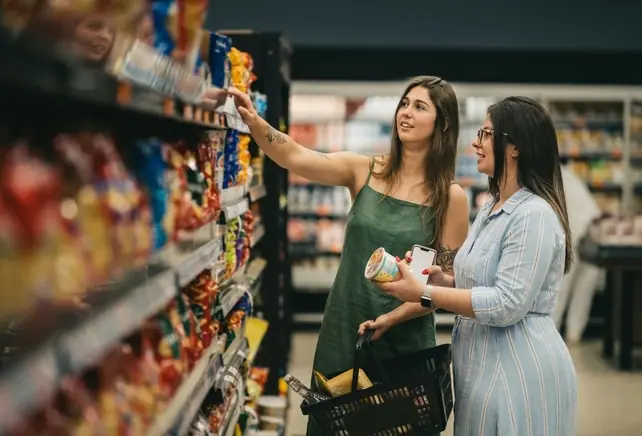
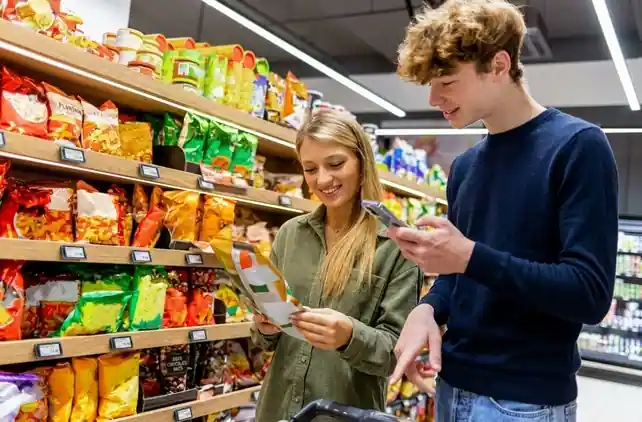
The first is content and search comparison: the “X vs. Y” articles, review roundups, and AI-generated answers that shoppers and machines both lean on before buying. The second is shelf comparison, the literal placement of a private brand next to a national brand, forcing a real time choice at checkout. Marketplace branding, whether that means an Amazon storefront or a grocery aisle, runs on the same logic either way. The relationship between brand and retail used to run one direction, a manufacturer sold into a store and the store just stocked shelves. Now the store is often the brand itself, and the comparison happens inside a single retailer’s own shelf or search bar rather than between two outside companies. This article treats both arenas as two fronts of the same shift, not two unrelated topics.
The Shelf Battle: Private Labels vs. National Brands
What Actually Counts as a “National Brand”
So what are national brands? A national brand is a product owned and made by a manufacturer, then sold under that same name across many different retailers. Coca Cola is a national brand whether it’s bought at a supermarket, a gas station, or a corner store three states away. Tide and Kellogg’s work the same way, one company, one name, distributed everywhere. A private brand, also called a store brand, flips that: the retailer owns the name and the spec, and the product typically only shows up inside that retailer’s own stores. Kirkland Signature is the clearest example, it exists because Costco owns it, and it doesn’t exist anywhere else. That’s the real distinction, ownership and distribution, not quality or price, even though price and quality are what most shoppers actually notice on the shelf.

The 2026 Numbers Behind the Shift
The scoreboard right now leans further toward private label than it has in years. Circana’s midyear 2026 data, released through PLMA, and Daymon’s summer 2026 consumer survey both point the same direction, though the gap between how private label is winning by units versus by dollars tells its own separate story.
- Store brand unit market share hit a record 23.8% in the first half of 2026, an all time high. National brand units fell 0.5% over the same period while store brand units rose 0.2%.
- National brands still grew faster in dollar sales, up 2.2% year to date, while store brand dollars stayed flat. Store brand dollar share sits at 21.2%, just off its own record, and pricing, not just preference, explains part of that gap.
- 95% of US shoppers now buy private label, and 69% do it on most or every trip to the store.
- 98% of shoppers rate private label pricing as the same or better than name brands, 96% say the same about overall value, and 88% say the same about quality.
Case Study: Kirkland Signature and the Limits of “Store Brand”
Costco’s Kirkland Signature line is the clearest proof that private label doesn’t have to mean cheap and generic anymore. According to Costco’s own 2026 Annual Meeting of Shareholders presentation, Kirkland Signature brought in roughly $90 billion in sales in fiscal year 2025, the year that ended August 31, 2025. Costco’s total company net sales that year were $269.9 billion, so Kirkland alone accounted for close to a third of everything the company sold. That’s not a rounding error. That’s a single store brand outselling most Fortune 500 companies on its own.
Kroger tells a different version of the same story. Its private label portfolio brought in about $32 billion, roughly 25% of sales excluding fuel, in its most recently reported fiscal year (2024). The number is still enormous, and it still beats plenty of national brands outright. But the strategy behind it is different. Costco put everything into one name and let it become the store’s whole identity. Kroger runs a portfolio of separate private brands instead, spreading bets across value, mid, and premium tiers rather than staking everything on a single flagship. Neither approach is wrong. They’re just different answers to the same question: how much of a retailer’s own identity should live inside its private label?

How Competing Retailers Use Private Brands Differently
Costco’s single brand approach is actually the exception, not the rule. Most grocery chains run what the industry calls a tiered assortment strategy, stacking value, mid tier, and premium private label lines next to national brands rather than betting everything on one name, according to NielsenIQ’s 2025 analysis of the private label shelf. A discount grocer might use its private brand purely to undercut price on staples like paper towels or canned beans. A mid market chain might run three or four private lines at once, one built to compete on price, another built to feel premium enough to replace a national brand entirely. That tiering is a direct response to how competing retailers are fighting for the same shopper. If every store within driving distance carries the same national brands, the private label tier is often the only real point of difference left on the shelf.
The Search Battle: Why Comparison Content Is Becoming the Default
The same logic is playing out in search results, just faster and less visibly. At Semrush‘s own Spotlight conference in Amsterdam in October 2025, the company’s SVP of enterprise solutions, Marcus Tober, laid out a version of this shift that should worry any brand relying on being found rather than being cited. Tober’s research found that only 6% of the sources ChatGPT actually pulls from get mentioned by name in its answers, meaning 94% of the content powering those answers earns no visibility, no traffic, and no brand credit at all. That’s real data from a company with genuine access into how AI search behaves, though it’s worth remembering it’s vendor research about Semrush’s own area of expertise, reported secondhand by The Drum rather than independent journalism.
The practical response, according to that same reporting, is for brands to become their own best source. SentinelOne and ClickUp have both started publishing neutral, third person comparisons of their own products against competitors, specifically because that format reads as authoritative enough for AI engines to cite. Reddit has become the single most cited source inside ChatGPT, cited roughly 25 times more often than Google itself gets cited, which means comparison and opinion content is happening whether a brand participates in it or not. The brands sitting this out aren’t avoiding comparison. They’re just letting someone else write it for them.
Case in Point: St. James Iced Tea vs. Brez
It’s worth pausing on what a search for “St. James vs. Brez” actually implies before answering it, because the implied premise is wrong. St. James Iced Tea and Brez aren’t rivals. One is an organic iced tea. The other is a hemp derived THC beverage. Nobody is standing in an aisle choosing between them the way they’d choose between two colas. What they are is two real brands that launched into crowded, adjacent corners of the beverage industry at roughly the same moment, using almost opposite playbooks, and that contrast is more useful to study than a fake head to head would be.
St. James was built by the Ferolito family, the same family behind AriZona Iced Tea, and its growth strategy leans on nostalgia and story rather than function: a tie in to HBO’s The White Lotus, a sense of inherited credibility from AriZona’s decades in the category. There’s no public revenue figure for St. James, so its results have to stay a matter of strategy rather than a number. Brez took the opposite route. Launched in 2023, it reached $50 million in sales by 2024 and crossed $60 million in profitable revenue by August 2025, growth built almost entirely on being first to market at the most broadly legal THC concentration under the 2018 Farm Bill, not on any brand story at all. It’s a useful contrast because the category around both of them is moving fast. THC beverages did $239 million in mainstream US retail sales in the year ending June 2026, up 135% year over year, while total alcohol dollars actually fell 3.3% over the same stretch.
Why Comparison Works: The Three Dimensions of Customer Experience
There’s a reason comparison content and comparison shelves both convert better than a single product pitch, and it comes down to how people actually evaluate a purchase. Customer experience has three dimensions, according to the framework laid out by the customer experience firm Renascence: functional (did the product actually work), emotional (how did using it feel), and social (what does owning or using it say about the buyer). Most single product marketing only really addresses one of these at a time, usually the functional one, because that’s the easiest to make a claim about.

A side by side comparison forces all three into view at once, whether it’s two cans sitting next to each other on a shelf or two products stacked in a blog post. A shopper picking between a national brand and a private label isn’t just asking which one works better. They’re weighing whether the money saved feels smart or feels cheap, and whether the retailer’s own name on the package says something about them as a buyer. Comparison formats win because they answer a three part question, not because they’re a trendy content format.
What McKinsey’s Research Says About Brand Building Right Now
McKinsey’s Growth, Marketing & Sales practice has been tracking how marketing leaders themselves feel about this shift, and the gap between what they believe and what they’re actually equipped to do is wide. A survey of 104 marketing leaders across Europe and North America, conducted between March and May of 2024, found the following:
- 87% of CMOs believe brand building is strategically important, but only 58% rate their own organizations as mature or extremely mature at actually doing it.
- Only 27% of marketing leaders feel equipped to handle their expanding responsibilities, which now stretch into commerce, pricing, and comparison facing content.
- Separately, McKinsey’s broader research into customer journeys found that consistent, well managed customer experience can lift satisfaction by up to 20% and revenue by up to 15%, while cutting service costs by as much as 20%, in its report “The Three Cs of Customer Satisfaction.”
The takeaway isn’t that marketers don’t understand brand building matters. It’s that most of them know they’re not resourced to do it well, right as comparison content and shelf competition are both raising the bar for what “doing it well” requires.
How to Compete When Everything Gets Compared
If You’re a National Brand
The clearest lesson from brands that survive private label pressure is that they stop competing on price and start owning a position private label literally cannot copy. Liquid Death is the sharpest example of this: it’s canned water, arguably the most commodity product imaginable, and yet no retailer’s private label water is a real substitute for it, because the brand isn’t really selling water. It’s selling an identity loud enough that a store’s own version of the same liquid doesn’t compete on the same axis at all. That’s the model. A national brand that only competes on function is exactly the kind of brand a private label is built to beat.
If You’re a Private Label or Challenger Brand
Private label wins when a retailer treats it like an actual brand instead of a cost saving SKU, with real positioning, consistent quality, and a management team accountable for more than margin. Kirkland Signature is the model for going all in on a single name and building enough trust that shoppers stop thinking of it as a substitute at all. Brez shows the same discipline from a challenger’s angle: instead of trying to out market established beverage categories, it moved fast into a specific, defensible space before bigger companies could claim it. Both routes require treating the brand itself as the product, not an afterthought attached to a lower price.
The Regulatory Wildcard That Could Reset the Comparison
Every comparison built around Brez comes with an asterisk worth stating plainly: the category it competes in could look different by the end of the year. A federal rule change is currently scheduled to take effect November 12, 2026, redefining hemp so that products containing more than 0.4 milligrams of total THC per container no longer qualify, a direct threat to most of the hemp derived THC beverage market, Brez included. As of early August 2026, the Senate voted 61 32 to reject an amendment that would have blocked a proposed 30-day extension to December 11, but the House passed its own funding bill back in June with no hemp language in it at all, and it isn’t back in session until September. Nothing changes until both chambers agree and the president signs it. Right now, November 12 is still the real, legally operative date. December 11 is a plausible outcome, not a confirmed one. A brand comparison built on today’s positioning can be overtaken by a regulatory calendar nobody controls.
FAQs
What’s the difference between a national brand and a private label?
A national brand is owned by the manufacturer and sold under the same name across many retailers, think Coca Cola or Tide. A private label, also called a store brand, is owned by the retailer itself and typically only sold in that retailer’s own stores, like Kirkland Signature at Costco. The split comes down to ownership and distribution, not quality.
Is private label actually beating national brands right now?
By units, yes. Store brands hit a record 23.8% unit market share in the first half of 2026 while national brand units fell. By dollars, national brands are still growing faster, up 2.2% year to date versus flat for store brands, largely because private label is winning share partly by competing on price.
Will the November 2026 hemp deadline actually shut down Brez?
Not necessarily, and not yet. A federal rule set to take effect November 12, 2026 would exclude Brez’s THC concentration from the legal hemp definition. The Senate has voted to preserve a 30-day extension to December 11, but the House hasn’t passed matching language and isn’t back in session until September, so November 12 remains the operative deadline unless that changes.
Sources
- The Shelby Report — Store Brands Hit 23.8% Unit Market Share
- PLMA — Store Brand Facts (21.2% dollar market share)
- Supermarket Perimeter — Daymon Summer 2026 Private Brand Intelligence Report
- The Drum — The new search battleground: why AI is rewriting the rules of brand visibility (Oct 29, 2025)
- Chowhound — Costco’s Kirkland Signature sales, citing Costco’s 2026 Annual Meeting of Shareholders
- Costco 2026 Annual Meeting of Shareholders presentation (primary source, via Costco IR)
- Costco 8-K, Fiscal Year 2025 Operating Results (SEC filing, $269.9B net sales)
- Grocery Dive — The Friday Checkout: Kirkland Signature turns 30 (Kroger $32B figure)
- Modern Retail — Why beverage brand Brēz is raising money through an SPV
- Forbes — THC Drinks Face a Federal Deadline That Could Upend the Market (July 2026)
- NACS — Senate Votes to Delay Hemp Ban (Aug 10, 2026, vote details)
- Nothing But Canna — The Senate Just Bought Hemp 30 More Days (Aug 8, 2026, current House status)
- Renascence — The Three Dimensions of Customer Experience Explained
- Chief Marketer — The CMO as Growth Driver, McKinsey Growth, Marketing & Sales survey
- McKinsey — The three Cs of customer satisfaction
- SmashBrand — Branded vs. Private Label: The Battle for Consumer Attention